Insurance license CE,
state by state.
Built around credit hours, ethics carve-outs, renewal cycles and reporting — not generic "take a class" summaries.
Core rules
05
Resident vs. Non-Resident Insurance CE: Why the Same License Can Have Two Rule Sets
How a producer's home state and other licensed states can each impose a different continuing-education requirement for the same person.
↗
The Ethics-Hour Carve-Out: Why 'Total CE Hours' Is Never the Whole Answer
Almost every state requires a set number of CE hours specifically in ethics, separate from the general total — and it can't be substituted with extra hours in another subject.
↗
How Your CE Actually Gets Reported: Sircon, NIPR, and the Gap Between 'I Took the Course' and 'The State Sees It'
Completing a CE course and having it show up on your license record are two different events. Here's what actually happens in between, and where it can break.
↗
Life, Health, and Property & Casualty: Why Your CE Requirement Depends on What You're Licensed to Sell
A producer holding multiple lines of authority in one state doesn't automatically owe separate full CE hour totals for each — but the details vary by state and by line.
↗
Missed Your CE Deadline: What Actually Happens to a Lapsed Insurance License
A missed CE deadline doesn't always mean starting over from the pre-licensing exam, but the reinstatement window and penalty structure vary sharply by state.
↗State guides
51
California Insurance CE: 24 Hours Every Two Years, With a 3-Hour Ethics Requirement
How California structures its biennial 24-hour continuing education requirement, the ethics carve-out, annuity add-ons, and the carryover rule for excess hours.
↗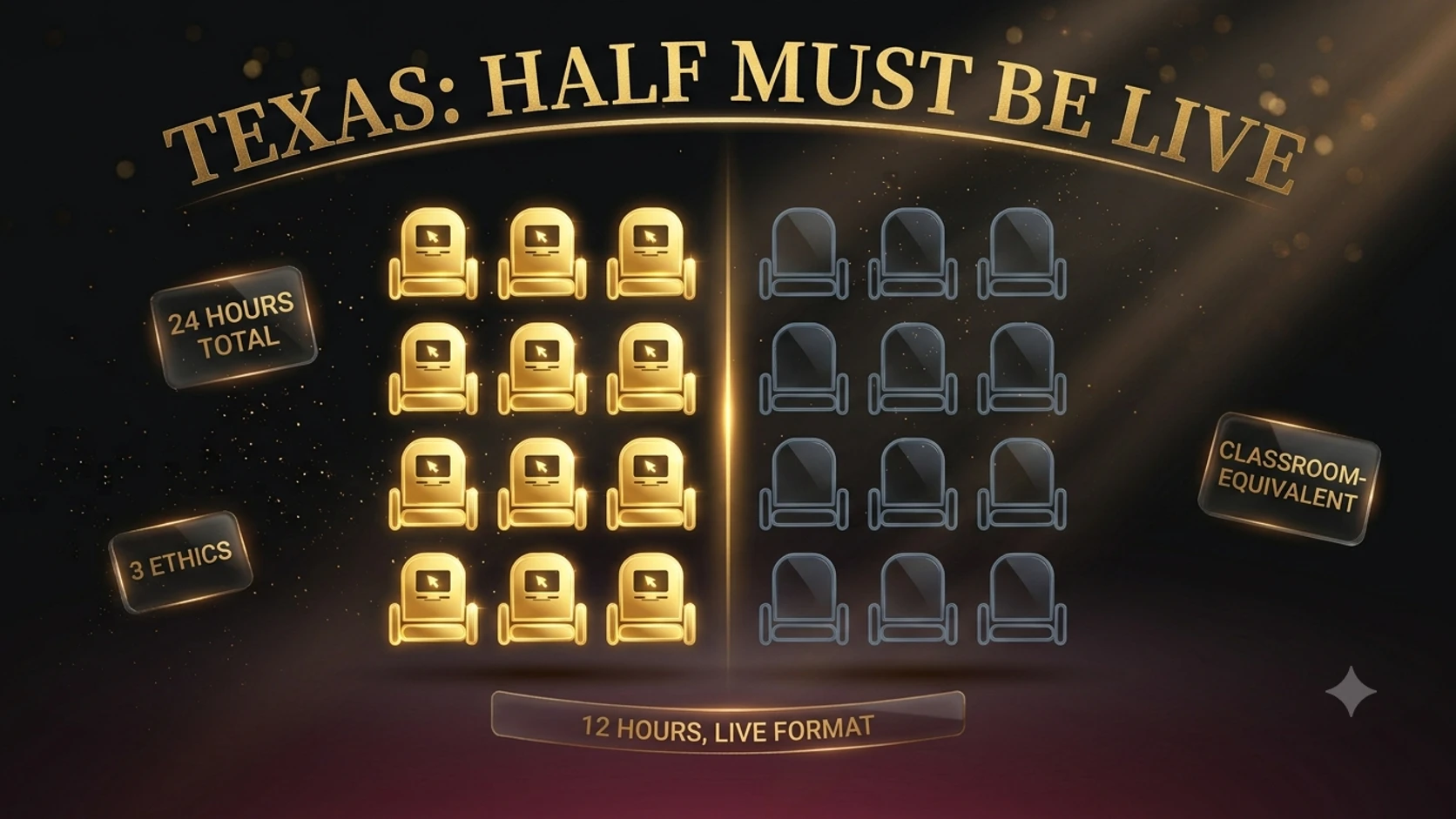
Texas Insurance CE: 24 Hours Per Two-Year Cycle, Half of It Must Be Classroom-Equivalent
Texas's 24-hour biennial requirement, the 3-hour ethics and consumer-protection rule, the classroom-equivalent minimum, and what happens if you miss the deadline.
↗
Florida Insurance CE: The Requirement Actually Depends on How Long You've Been Licensed
Florida is one of the few states where total CE hours drop after six years of licensure — but the 4-hour Law and Ethics course never goes away.
↗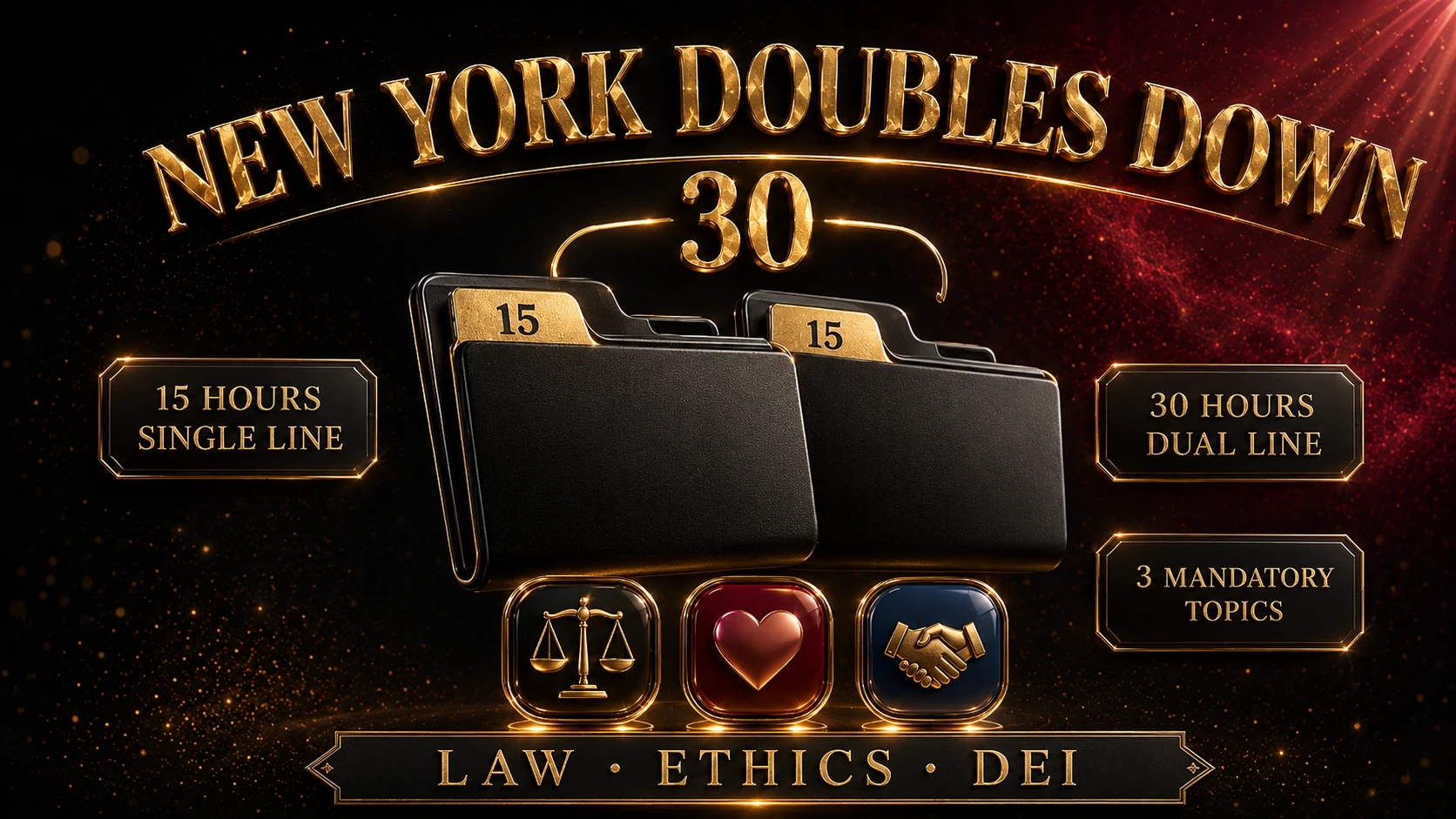
New York Insurance CE: Why 15 Hours Isn't the Real Number for Most Producers
New York's base CE requirement looks small next to other states — until you hold two lines of authority, or count the three separate mandatory-topic hours layered on top.
↗
Pennsylvania Insurance CE: 24 Hours, a New Ethics Deadline, and a Flood Requirement Most Producers Miss
Pennsylvania's 2025 rule changes added a hard ethics deadline for existing producers and a standalone flood-training requirement for property & casualty lines.
↗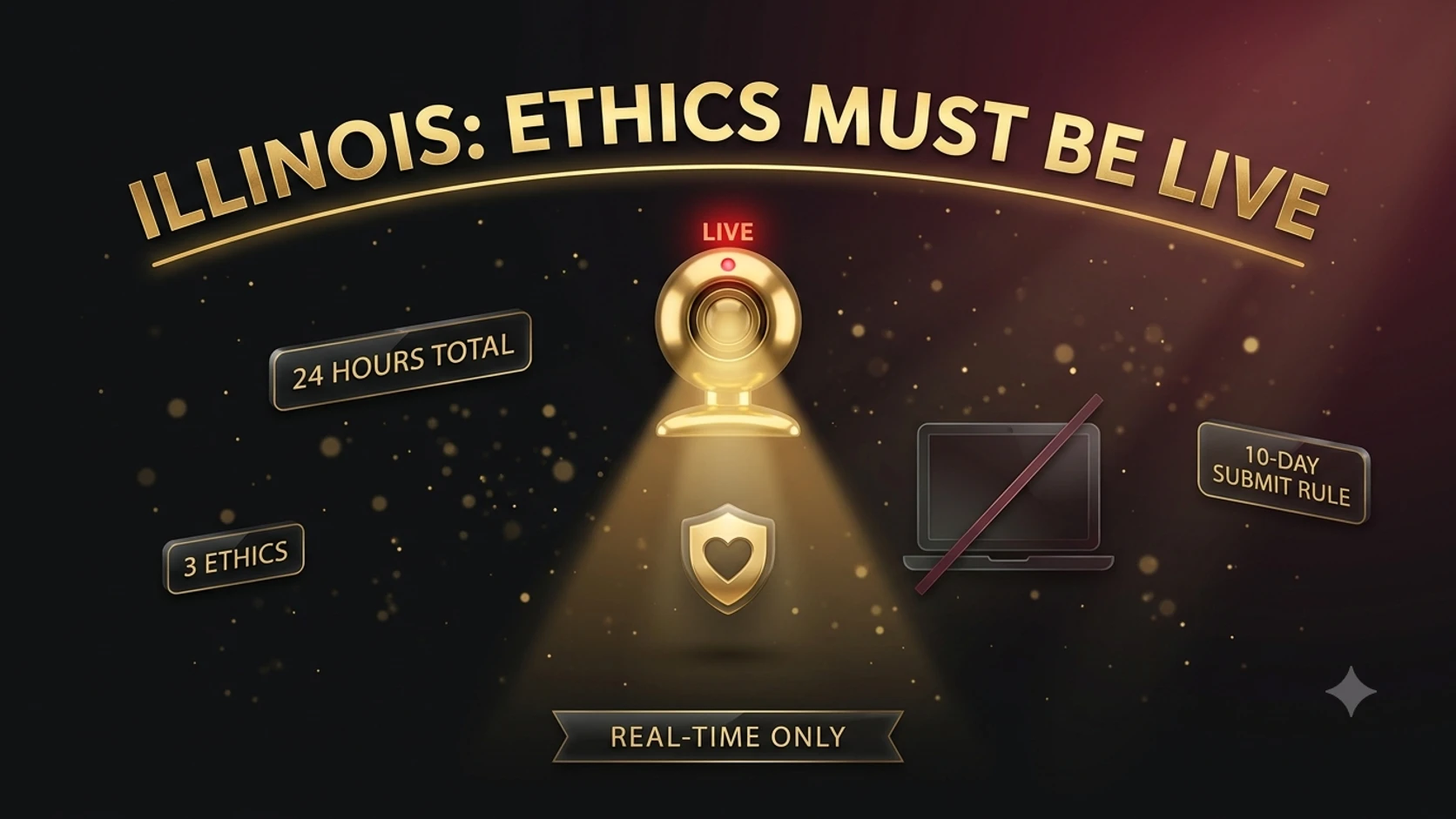
Illinois Insurance CE: Why Your Ethics Hours Might Not Count If You Took Them the Easy Way
Illinois requires 24 CE hours with 3 in ethics — but the ethics portion specifically cannot be satisfied through self-paced online coursework.
↗
Ohio Insurance CE: 24 Hours, 3 Ethics, and a Rule That Stops You Repeating a Course
Ohio's standard 24-hour, 3-ethics structure comes with a strict no-repeat rule and a hard requirement to finish CE before submitting renewal.
↗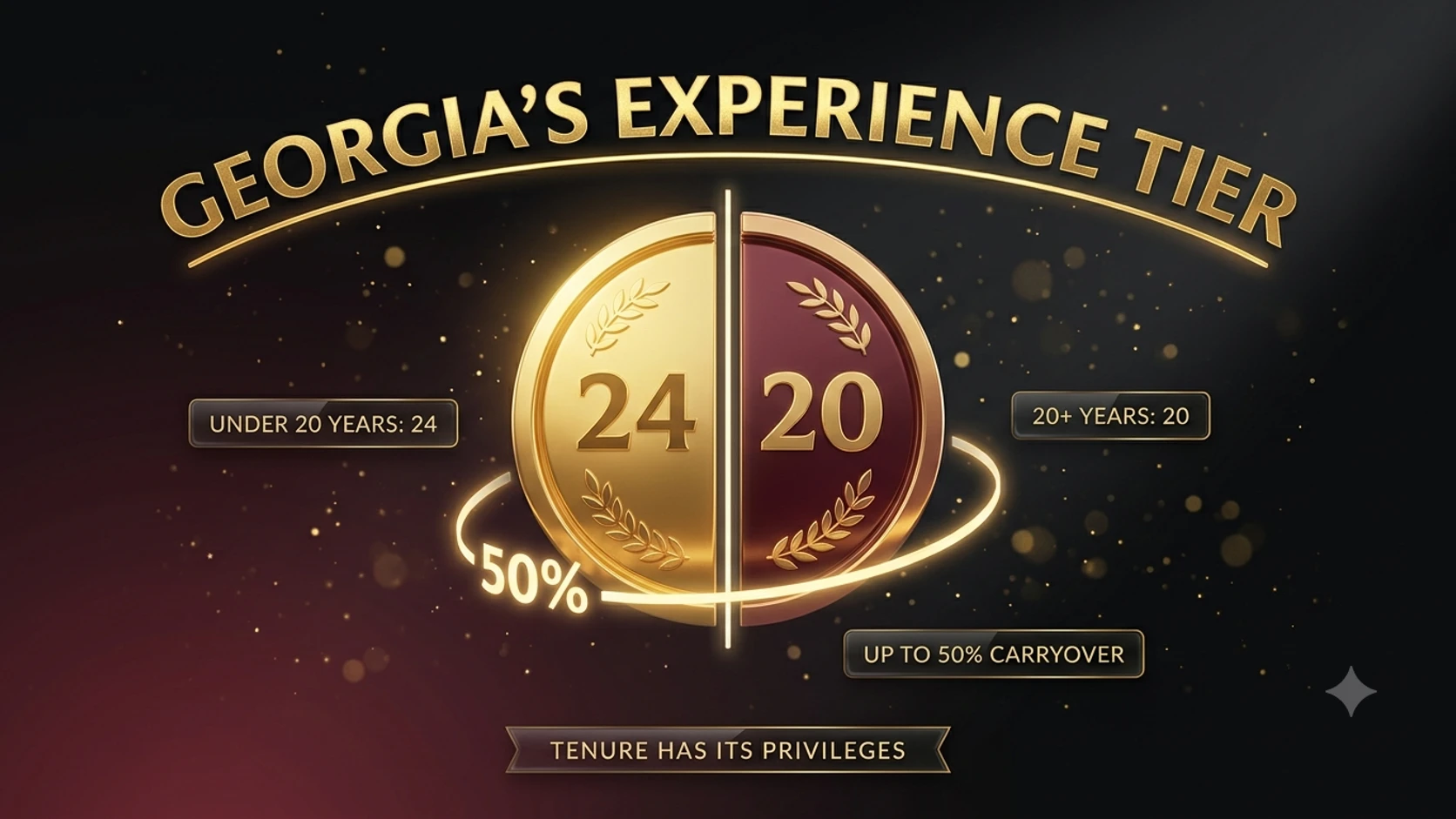
Georgia Insurance CE: The 20-Year Mark Cuts Your Hours — But Not Your Ethics Requirement
Georgia is one of several states with an experience-based CE reduction, but the milestone (20 years, not the more common 6) and the carryover rule are both distinct.
↗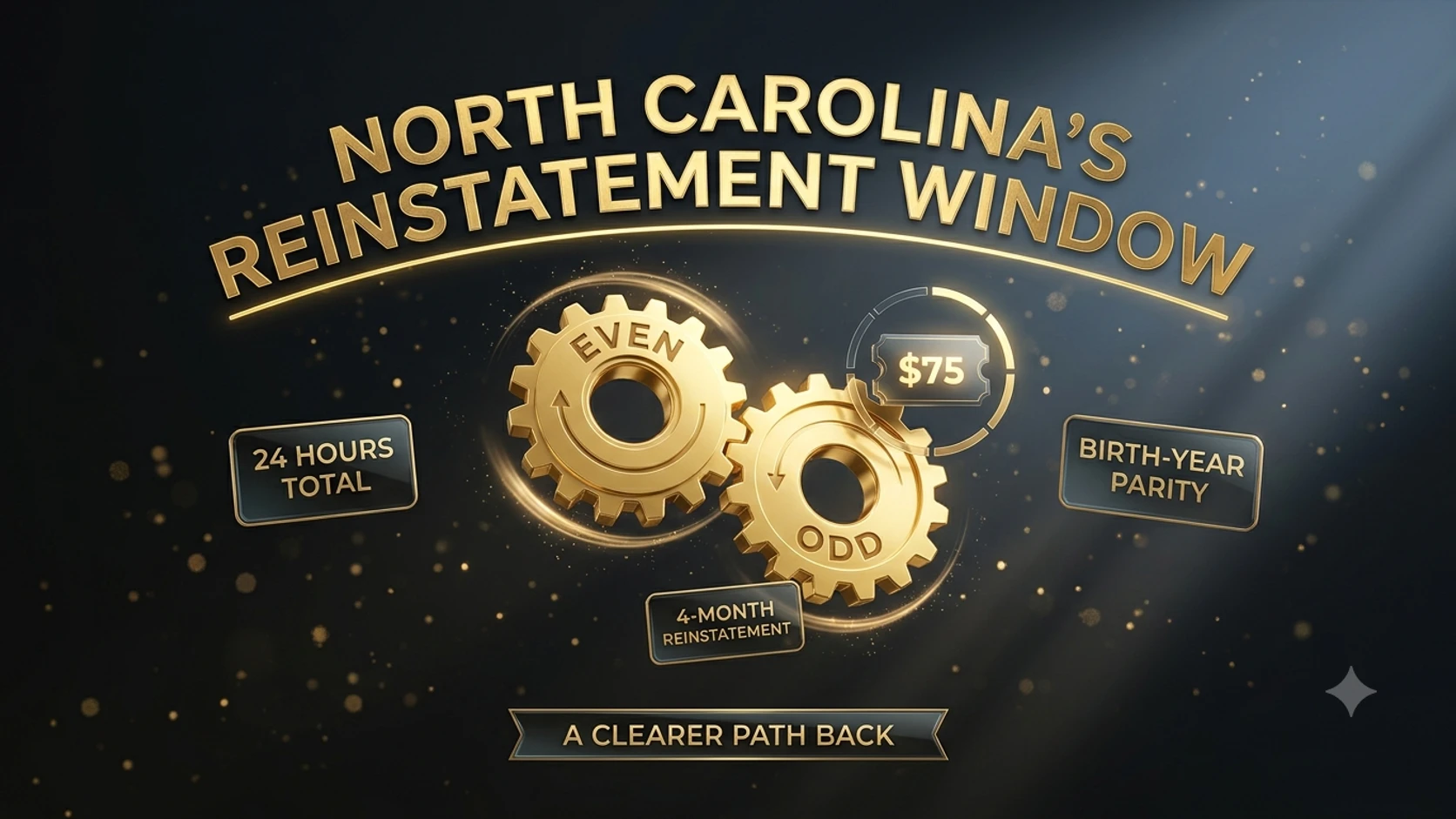
North Carolina Insurance CE: What Happens in the Four Months After You Miss the Deadline
North Carolina's 24-hour requirement comes with an unusually explicit grace period — and an unusually explicit penalty — for producers who miss their compliance date.
↗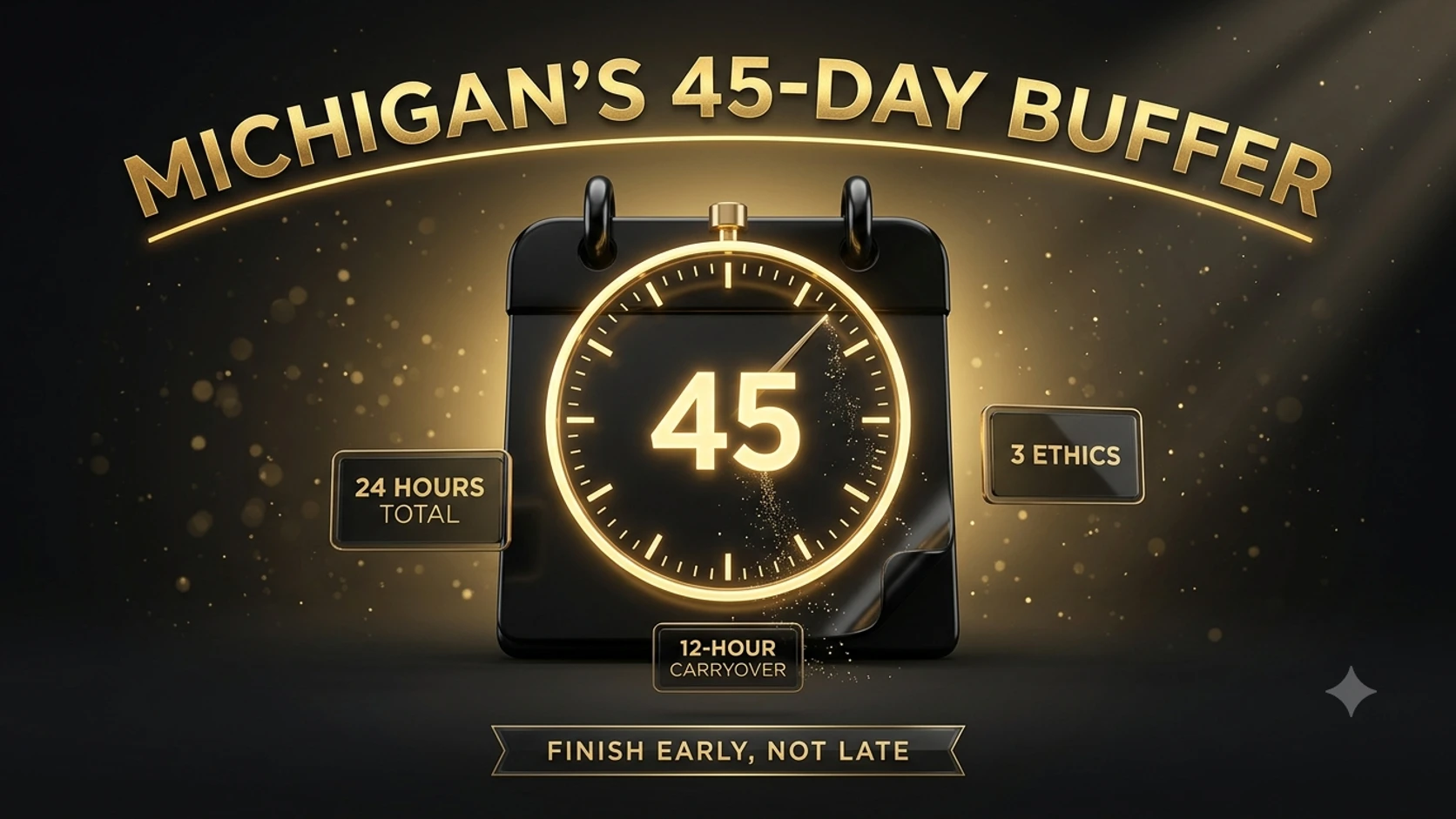
Michigan Insurance CE: The 45-Day Rule That Catches Last-Minute Filers
Michigan's standard 24-hour, 3-ethics structure comes with an unusually long required completion buffer before renewal — 45 days, not the more common 15 or 30.
↗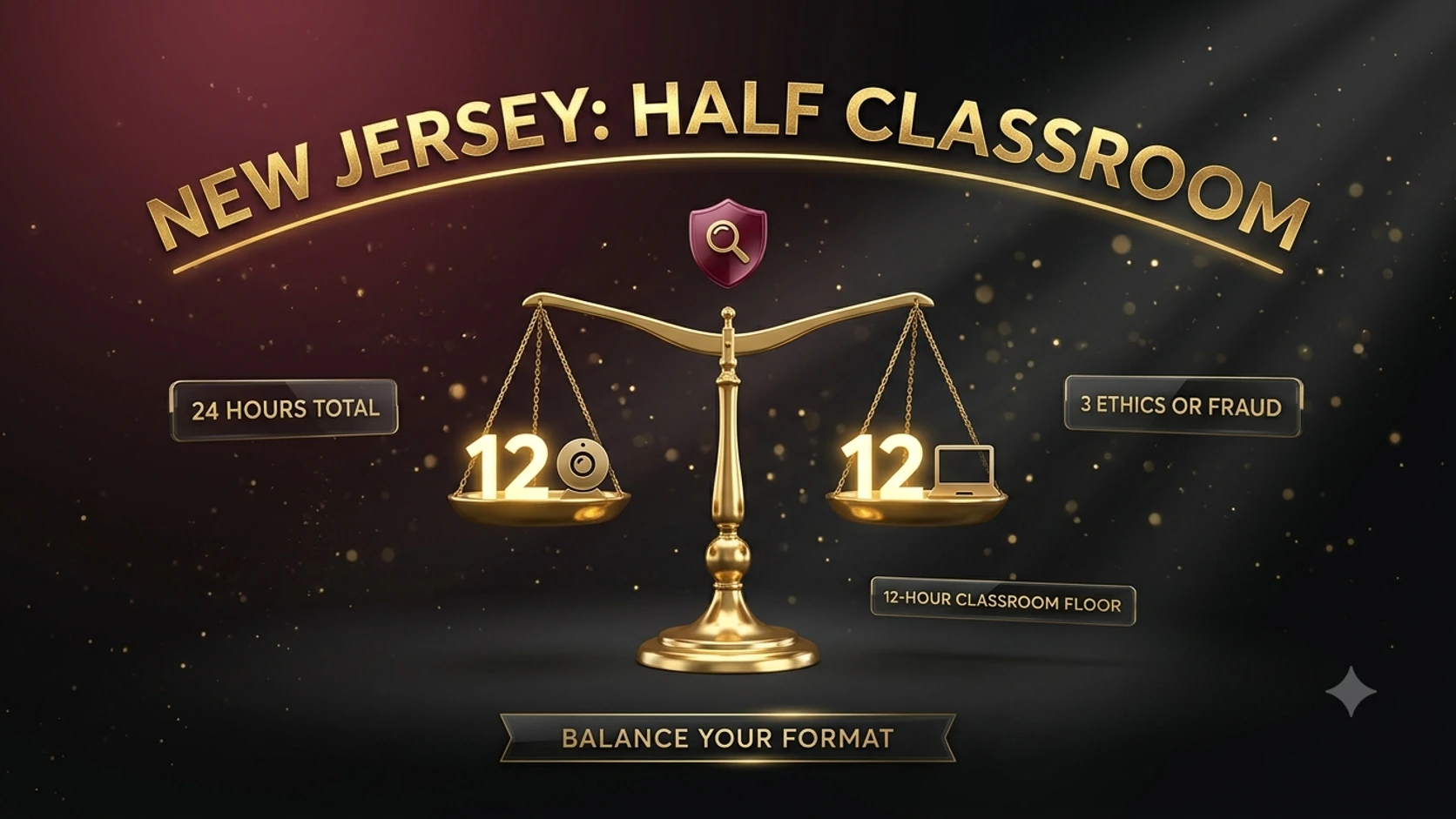
New Jersey Insurance CE: Half Your Hours Must Be Live — Here's What Actually Qualifies
New Jersey requires at least 12 of its 24 CE hours to come through classroom or classroom-equivalent instruction, a stricter split than most neighboring states.
↗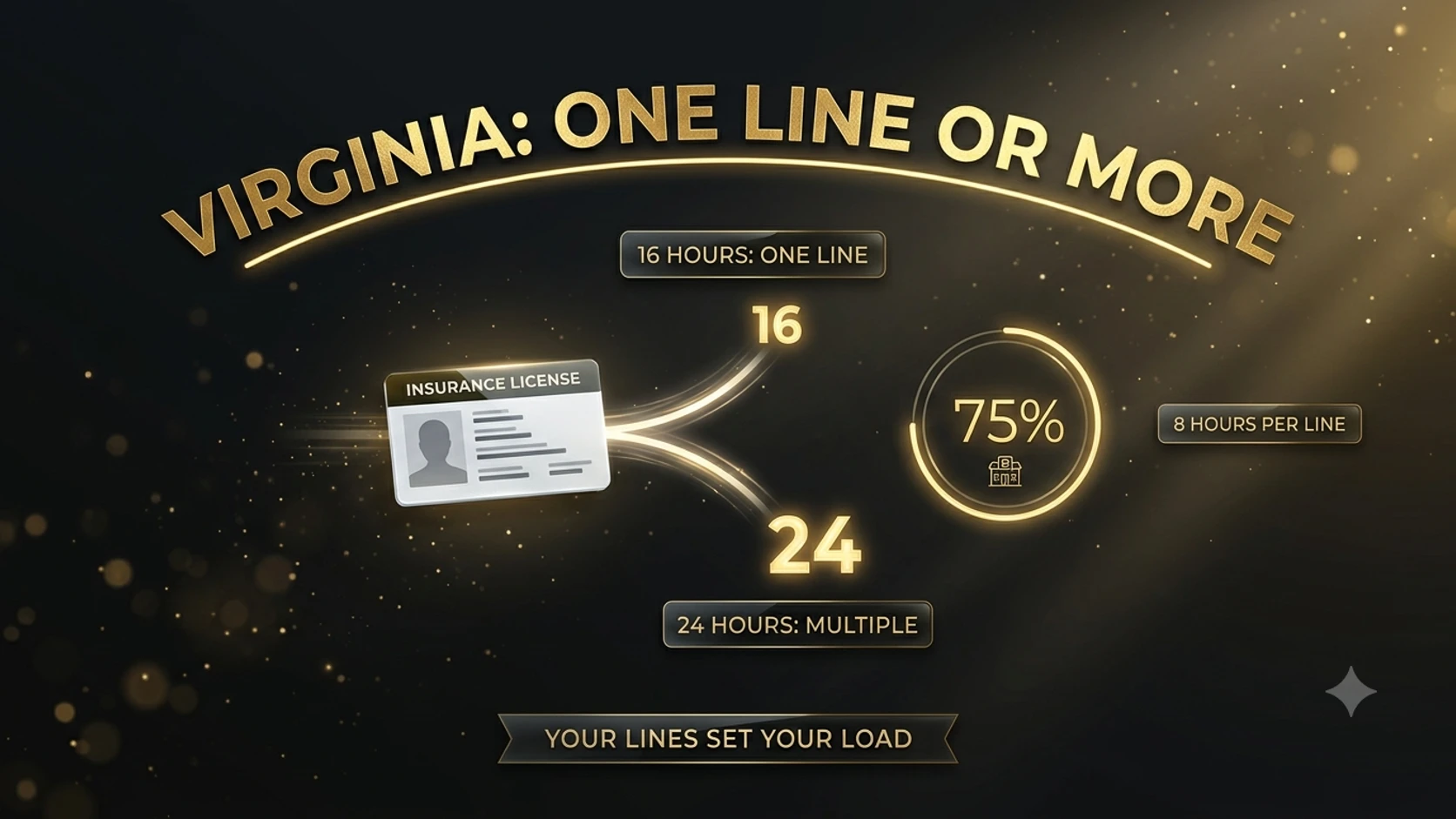
Virginia Insurance CE: One License, One Total — Two or More Lines, a Higher One
Virginia's CE requirement depends directly on how many lines of authority a producer holds: 16 hours for one line, 24 for two or more — with a cap on company-sponsored coursework.
↗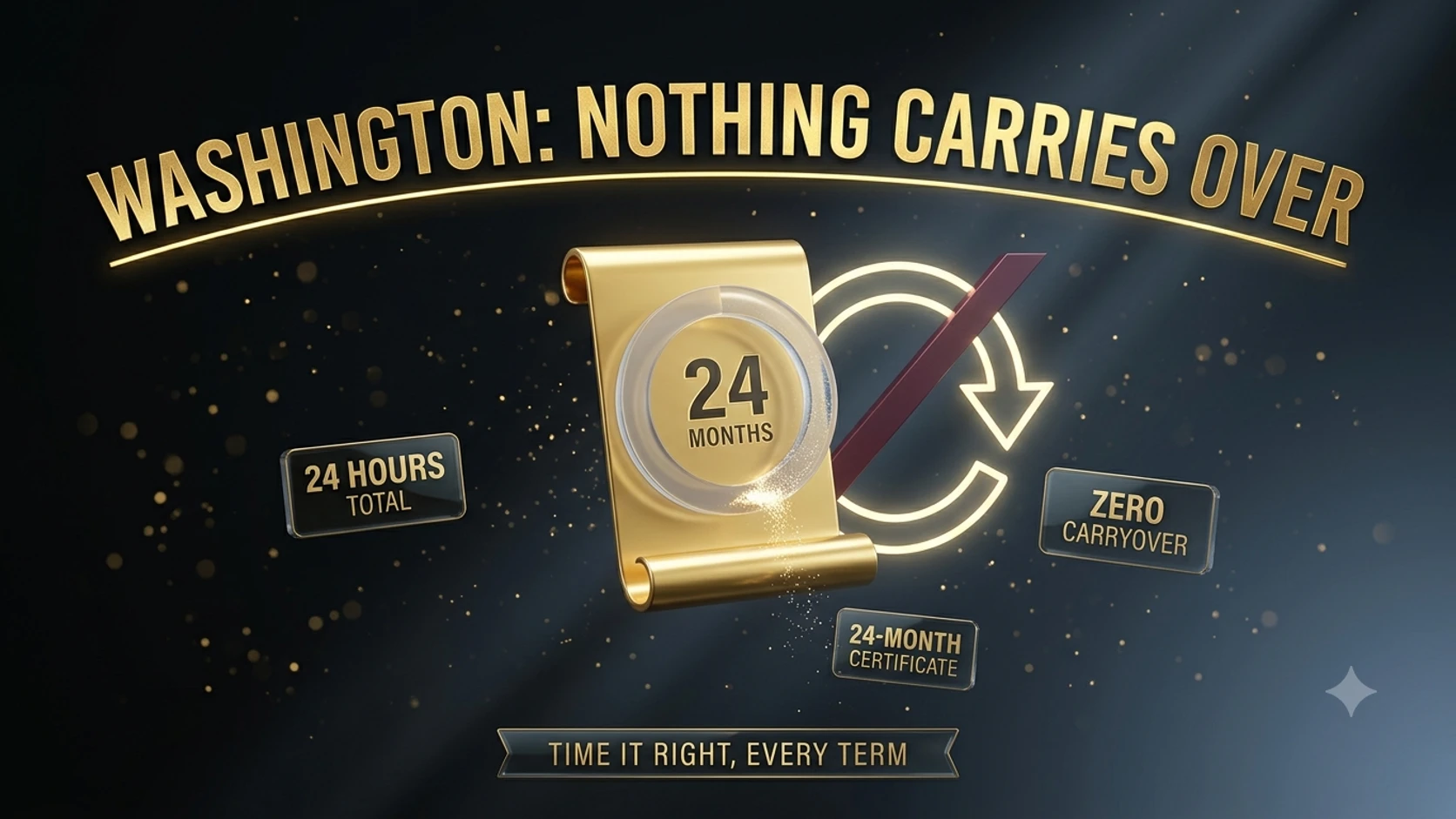
Washington Insurance CE: No Carryover, No Repeats, and a Hard 24-Month Certificate Window
Washington's 24-hour requirement is strict about timing: no excess hours carry forward, and a completion certificate is only valid for 24 months from the course date.
↗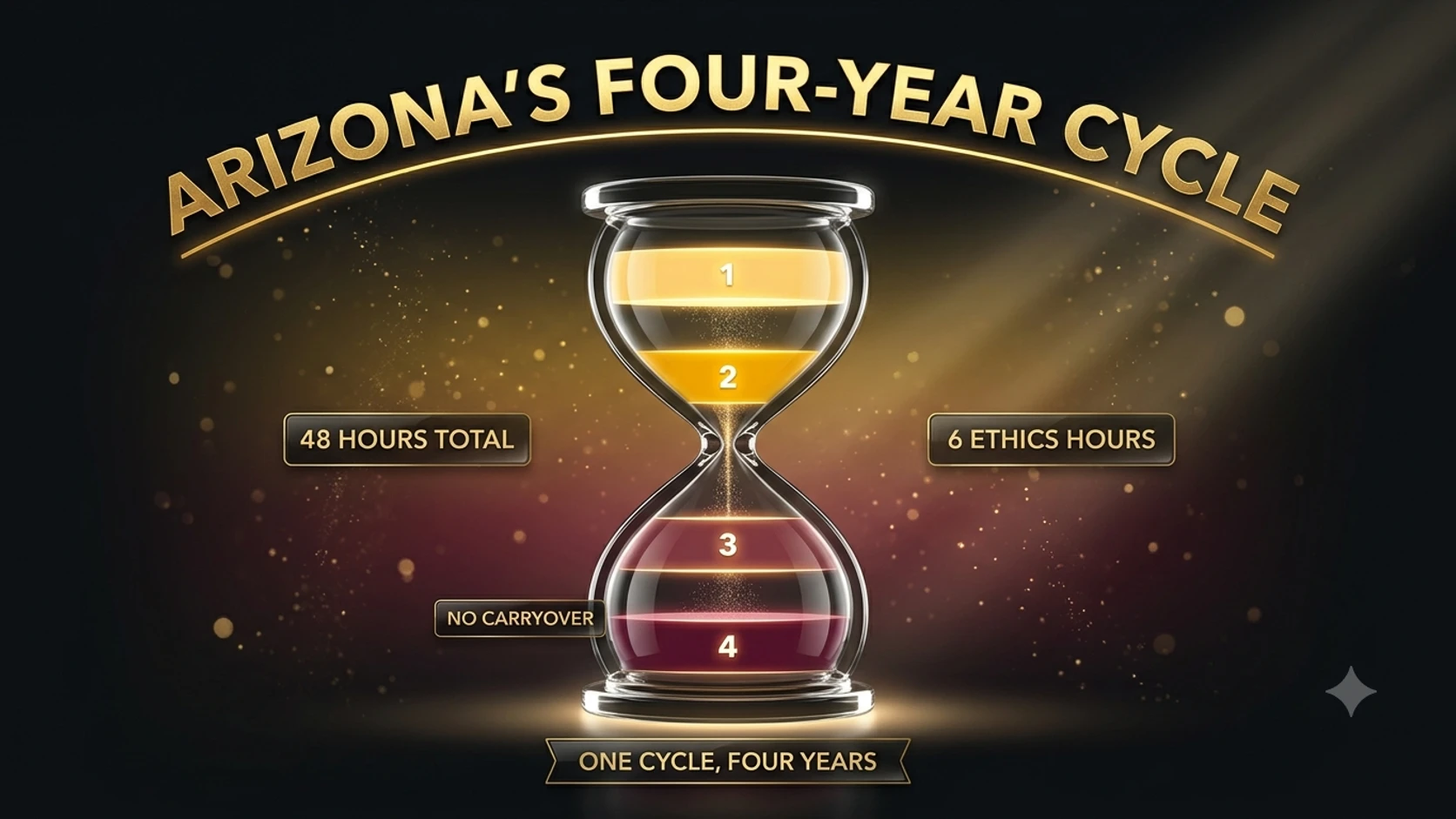
Arizona Insurance CE: A Four-Year Cycle Means 48 Hours, Not 24
Arizona is one of the few states running a four-year renewal cycle instead of two — which doubles the raw hour count compared to most states even though the annual pace is similar.
↗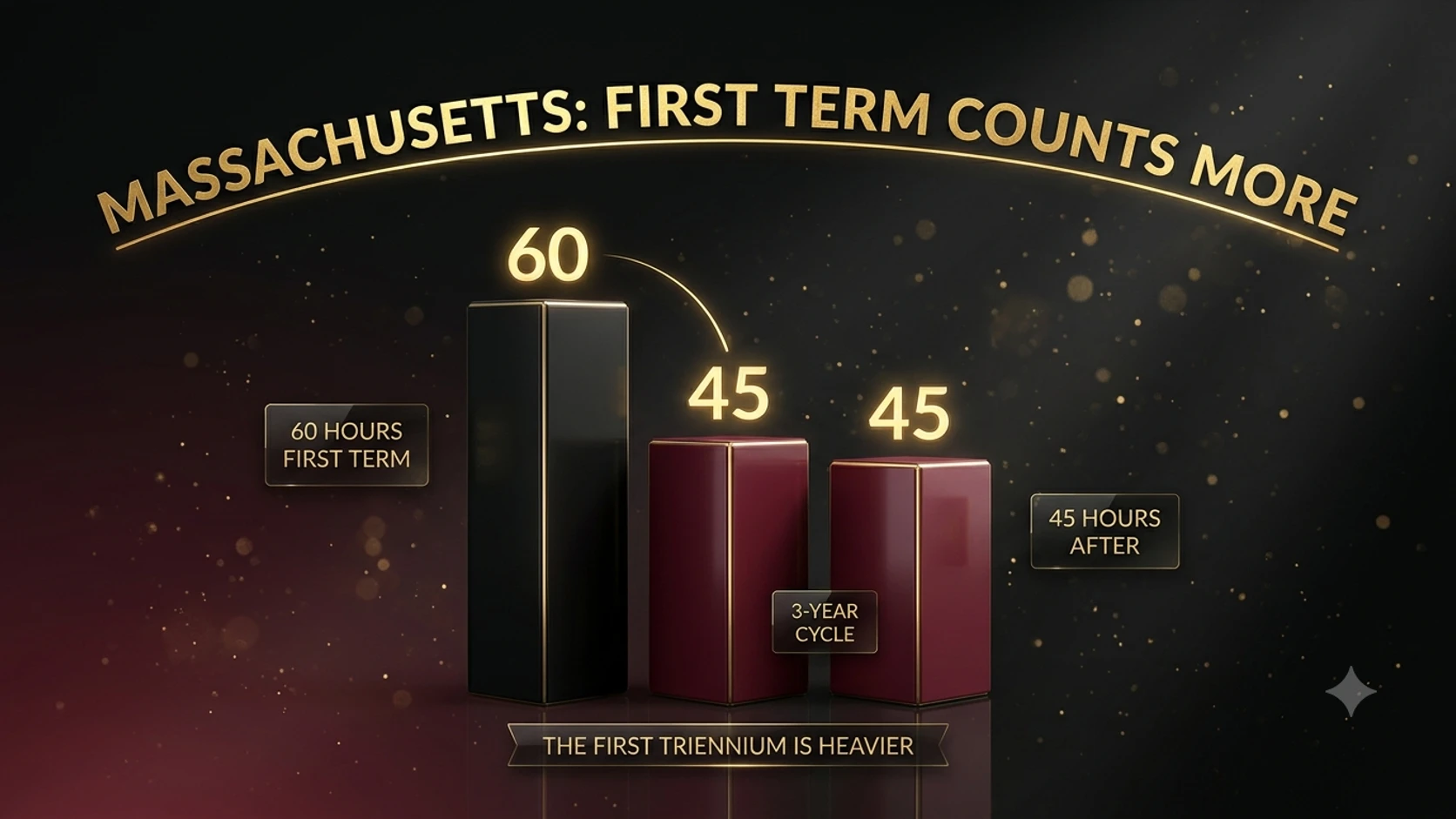
Massachusetts Insurance CE: A Three-Year Cycle With a Bigger First-Term Requirement
Massachusetts runs a three-year renewal cycle and asks new producers for more hours in their first term than in every term after.
↗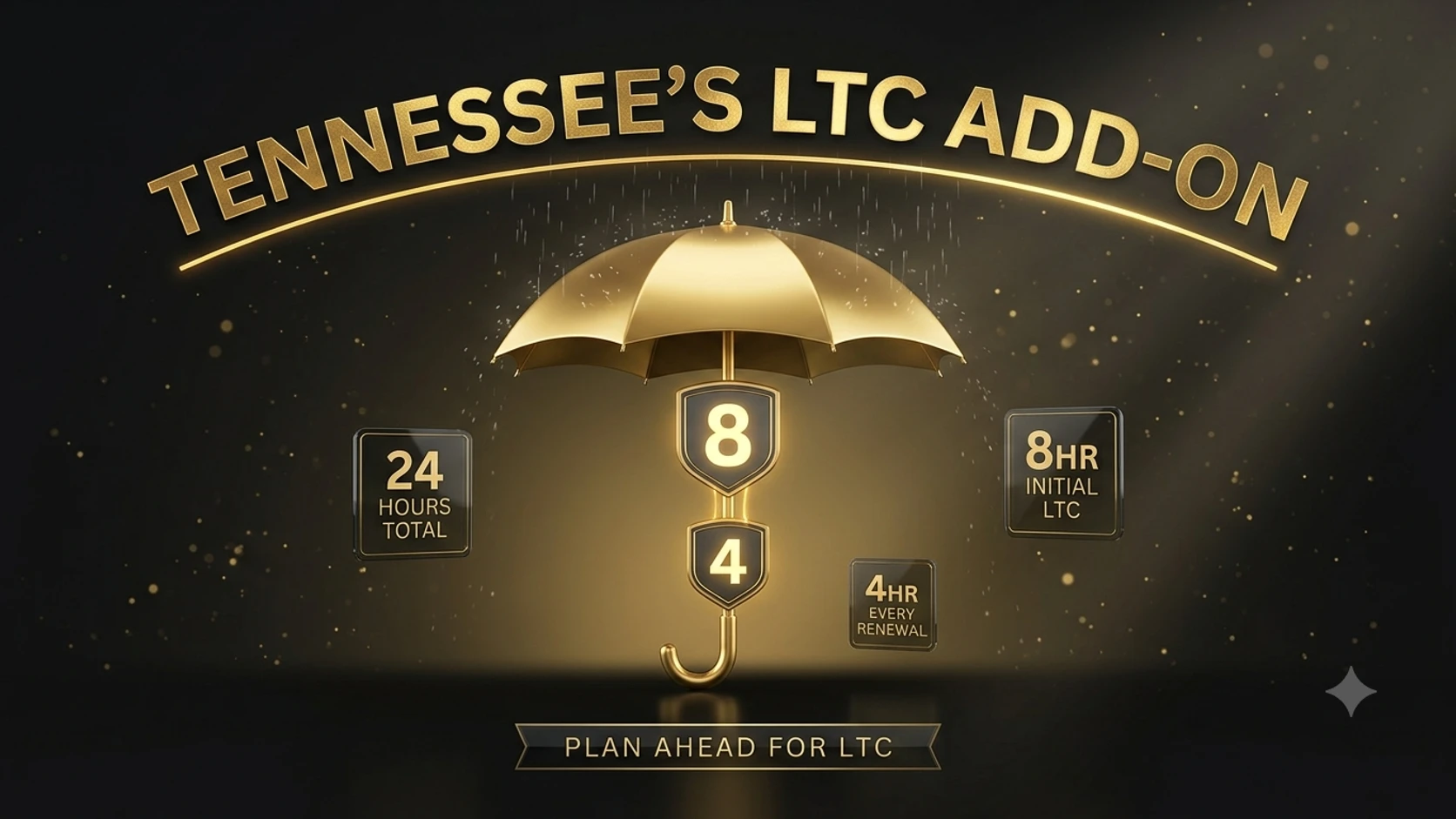
Tennessee Insurance CE: 24 Hours, Plus an 8-Hour One-Time Course If You Sell Long-Term Care
Tennessee's standard 24-hour requirement is straightforward, but producers selling long-term care products owe a substantial one-time training on top of it.
↗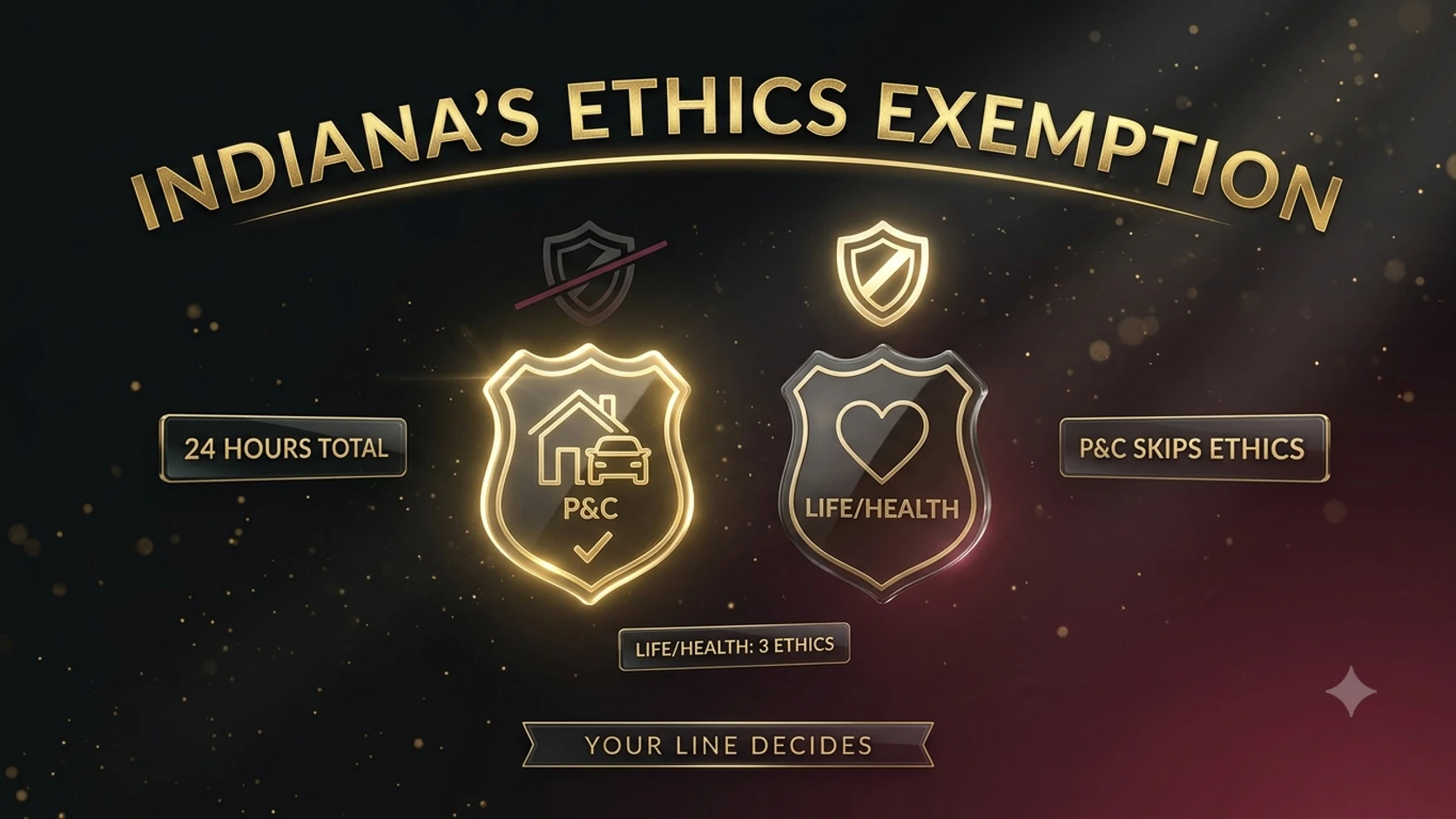
Indiana Insurance CE: Property & Casualty Producers Are Exempt From the Ethics Hours Everyone Else Owes
Indiana's ethics requirement applies to life, health, and annuity lines specifically — property & casualty producers skip that portion of the standard structure entirely.
↗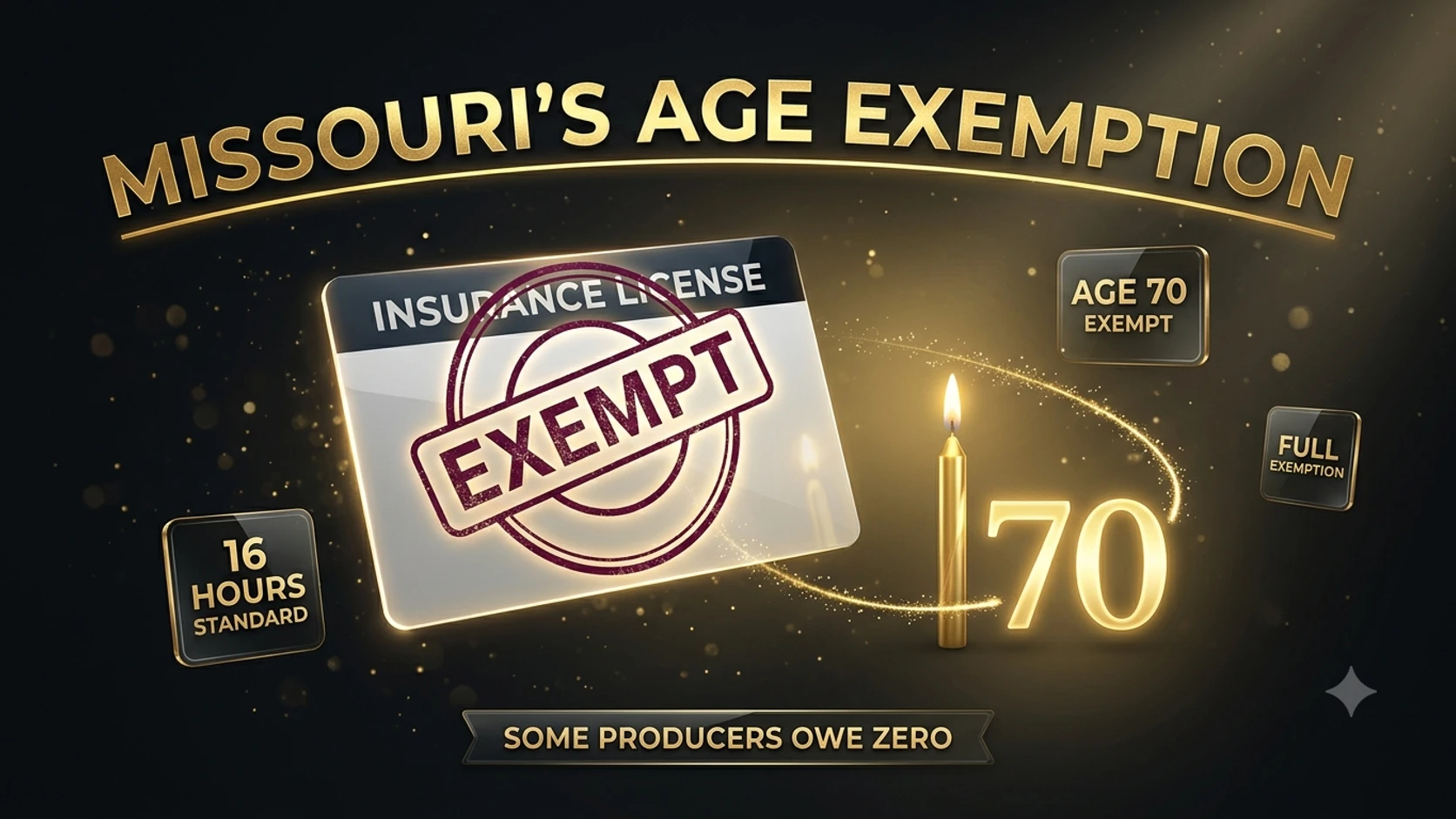
Missouri Insurance CE: A Lower 16-Hour Baseline, and Five Ways to Be Fully Exempt
Missouri's 16-hour total is on the lower end nationally, and the state carves out a genuinely unusual list of full exemptions — including one based purely on age and tenure.
↗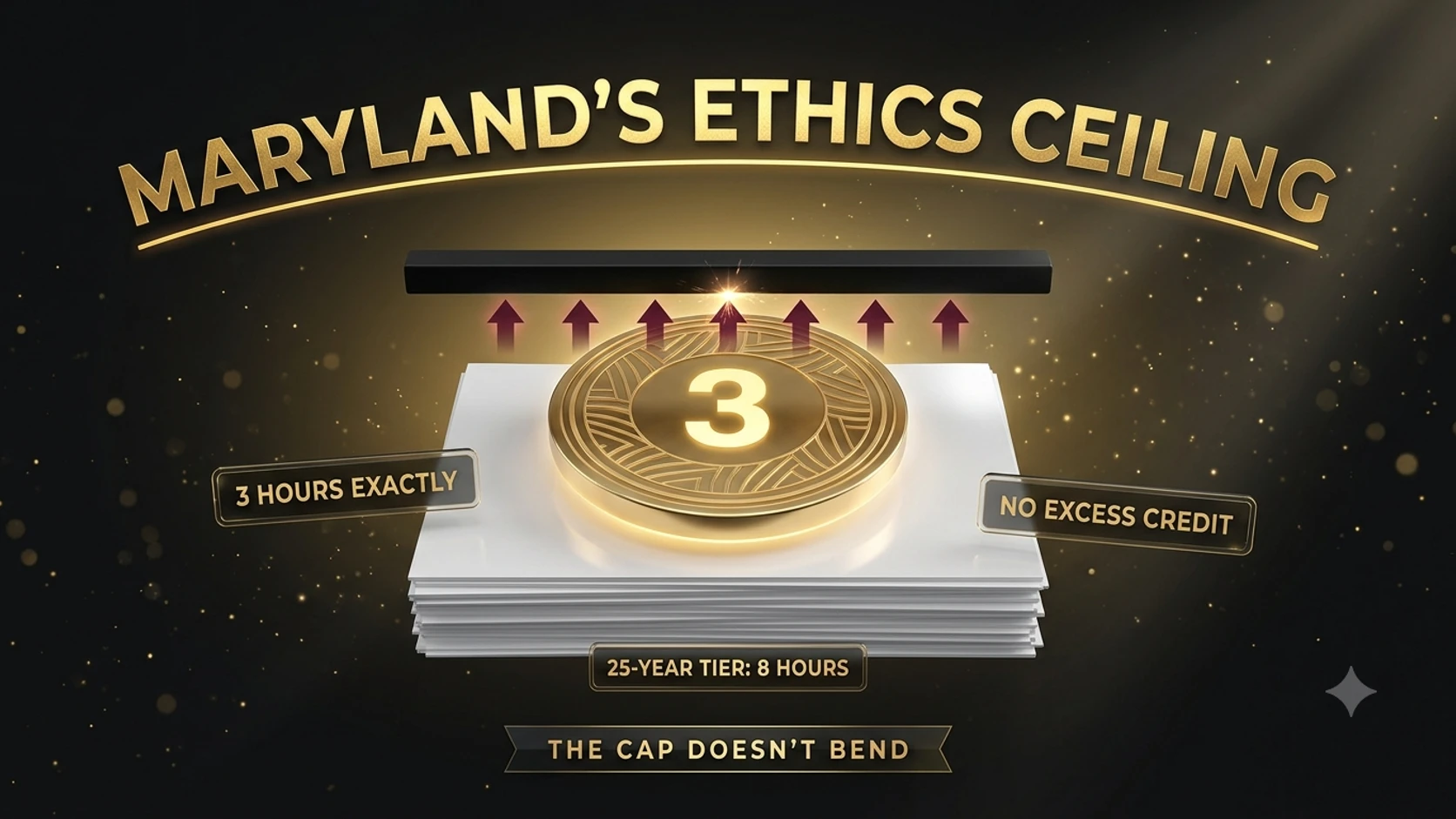
Maryland Insurance CE: Line-Specific Hours, a No-Carryover Rule, and a 25-Year Discount
Maryland requires 6 hours in each line for multi-licensed producers, bans carryover entirely, and cuts the total to just 8 hours after 25 years of continuous licensure.
↗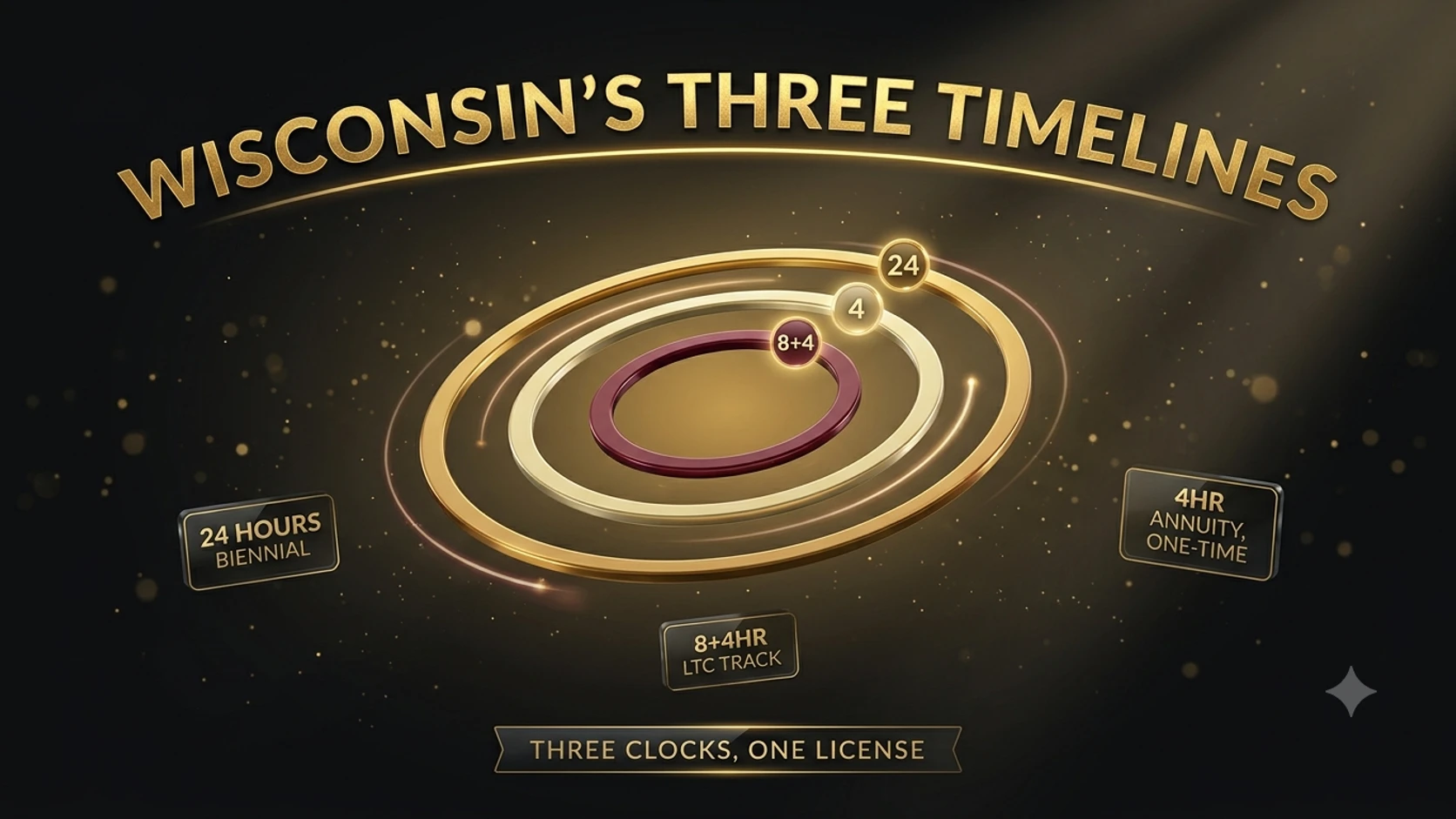
Wisconsin Insurance CE: 24 Hours Plus Two Separate One-Time Certification Courses
Wisconsin's standard 24-hour requirement comes with two distinct add-on certifications — annuity best-interest training and long-term care — each with its own one-time-plus-refresher structure.
↗
Minnesota Insurance CE: 24 Hours, Half Classroom, and a Cap on Company-Sponsored Courses
Minnesota requires 12 of its 24 CE hours to be classroom or classroom-equivalent, and limits how much can come from a producer's own insurance company.
↗
South Carolina Insurance CE: 8 Hours Per Line for Multi-Licensed Producers, Plus Ethics
South Carolina layers a per-line 8-hour minimum on top of its standard 24-hour, 3-ethics structure for any producer holding more than one line of authority.
↗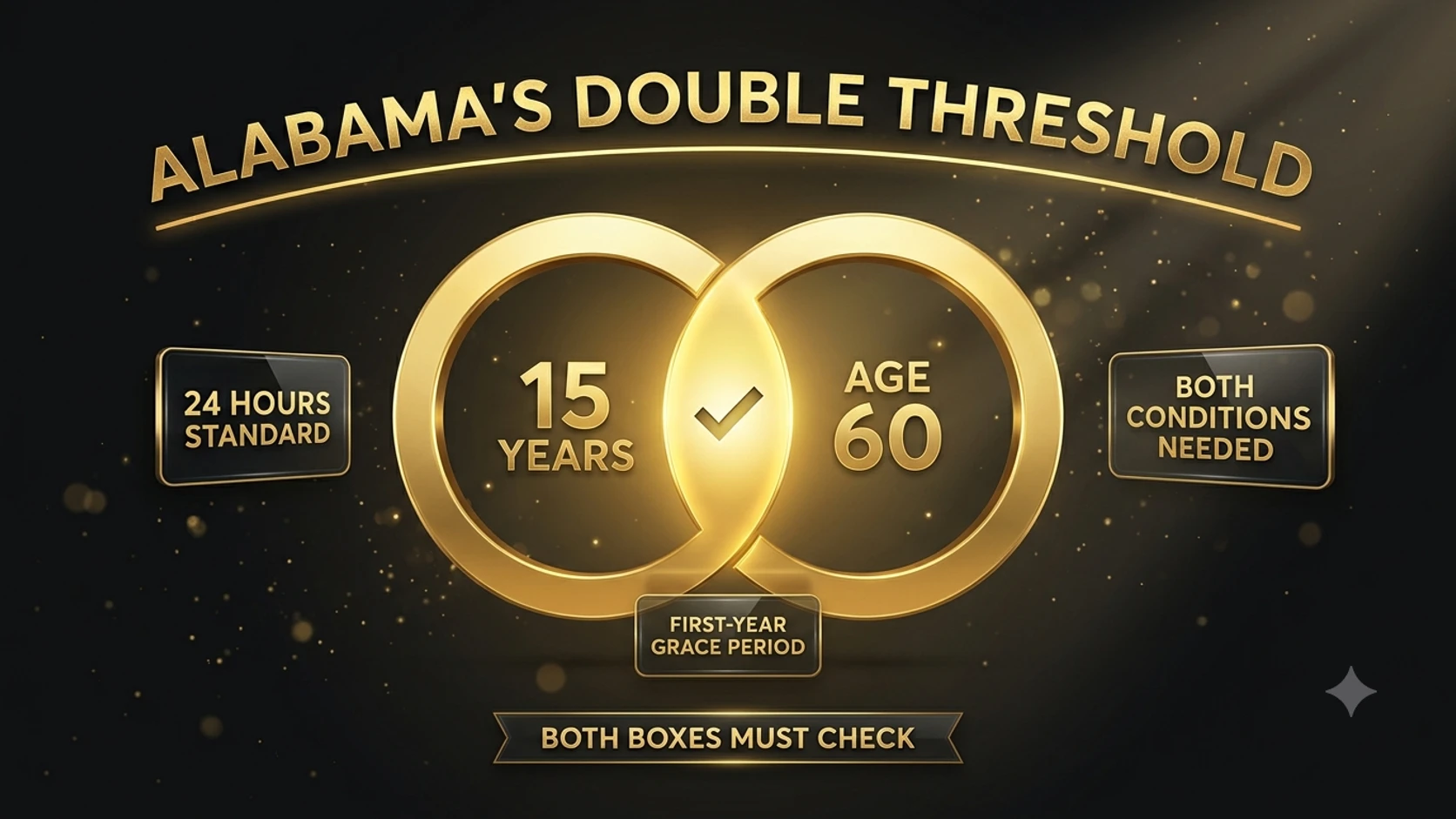
Alabama Insurance CE: A 15-Year-and-60 Exemption, Plus a Break for Brand-New Producers
Alabama exempts long-tenured senior producers entirely, and separately exempts anyone in their first 12 months of licensure from their very first renewal's CE requirement.
↗
Colorado Insurance CE: 18 of Your 24 Hours Must Match Your Actual License Type
Colorado breaks its 24-hour requirement into three distinct buckets: 3 ethics, 18 license-specific, and only 3 truly miscellaneous hours.
↗
Louisiana Insurance CE: A 2-Hour Legislative Update Requirement Arrives in 2027
Louisiana bakes a 3-hour flood requirement into its standard 24-hour total for property and casualty producers, and a new 2-hour legislative-update requirement takes effect for July 2027 renewals.
↗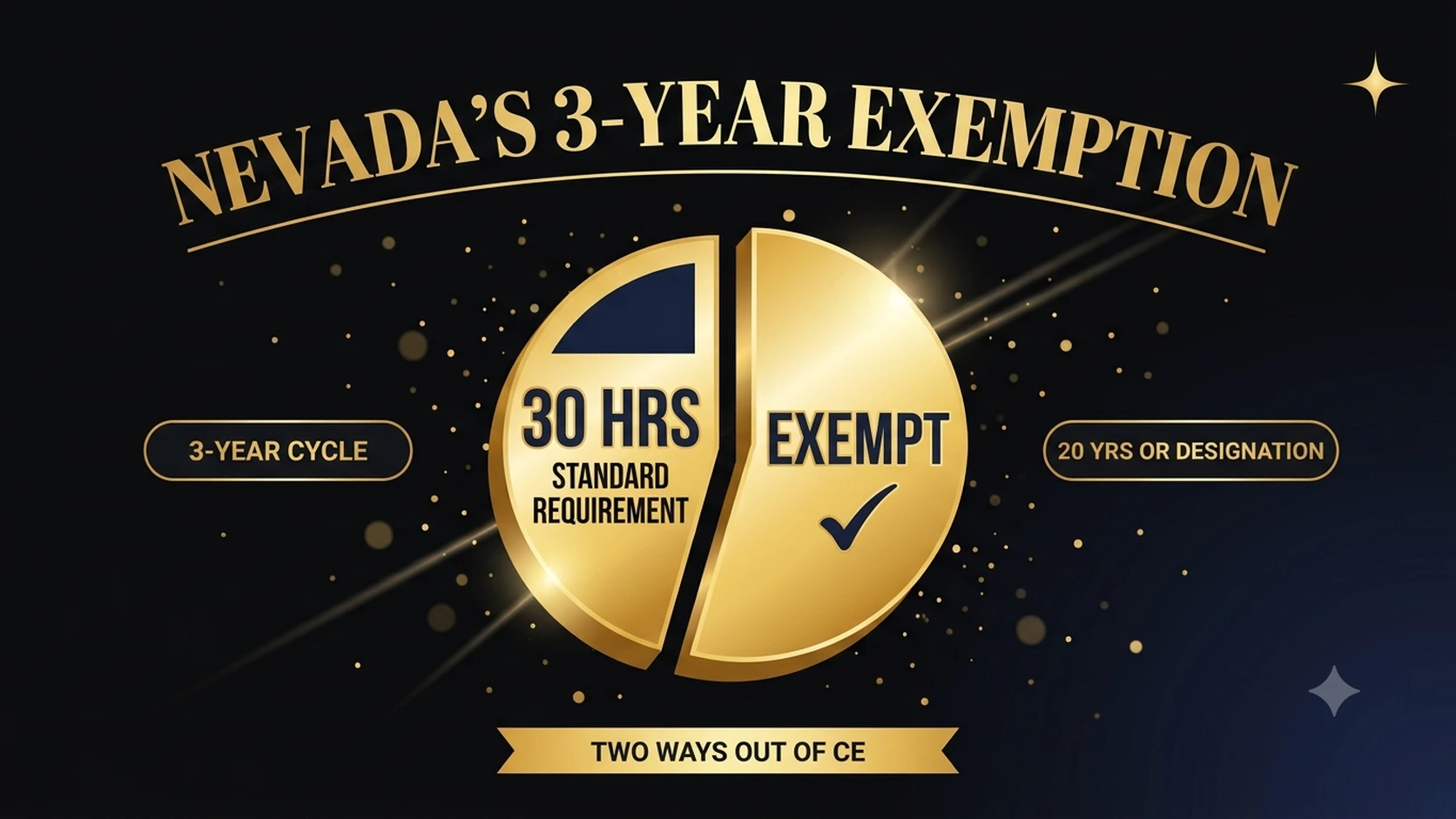
Nevada Insurance CE: 30 Hours Every 3 Years, With Real Exemptions for Experience and Designations
Nevada's unusual 3-year cycle, its 30-hour total, and the two ways a producer can be exempted from continuing education entirely.
↗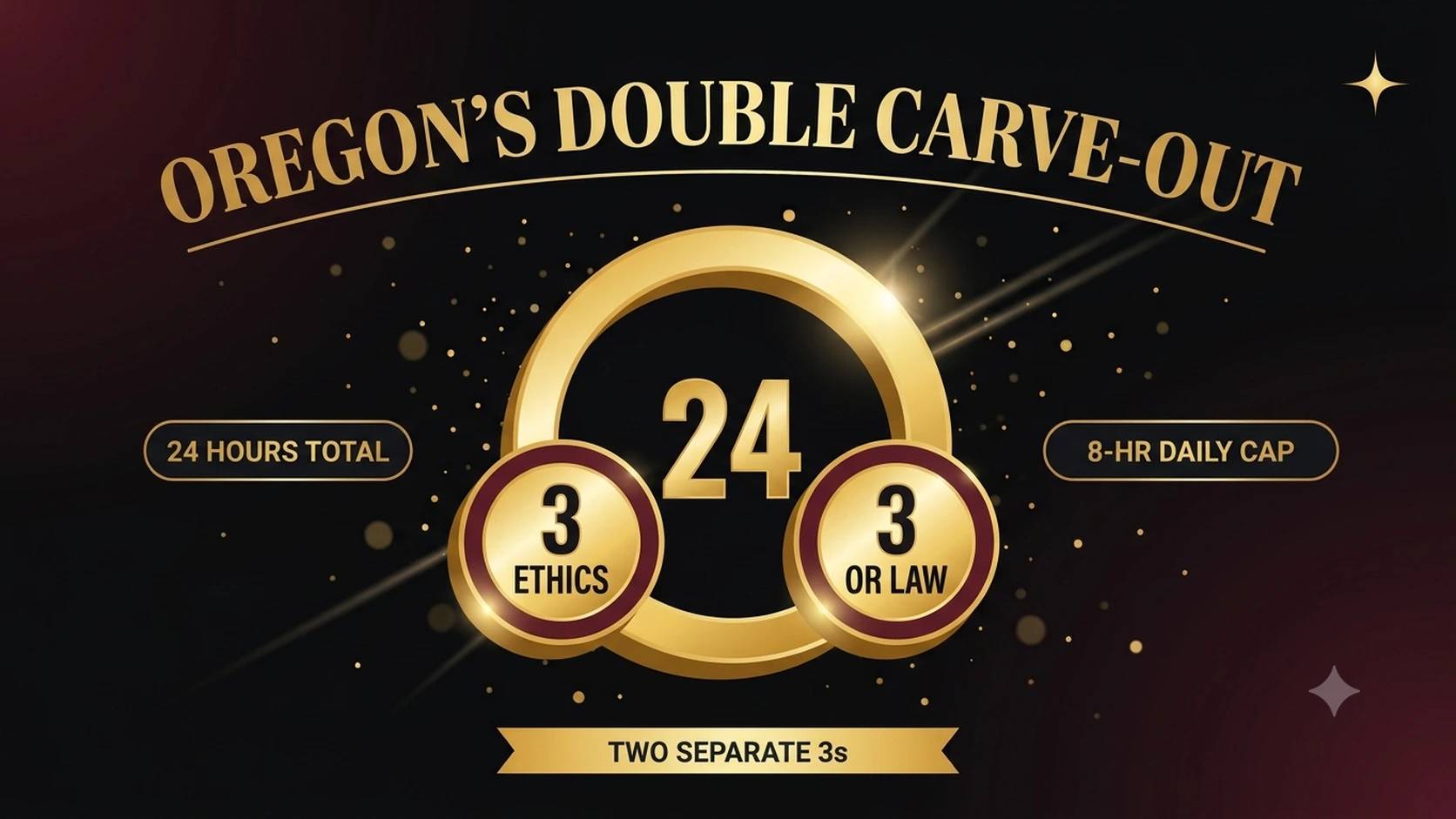
Oregon Insurance CE: Two Separate 3-Hour Carve-Outs, Not Just One Ethics Requirement
Oregon's 24-hour biennial requirement splits into a 3-hour ethics carve-out and a separate 3-hour Oregon-law carve-out that many producers mistake for the same thing.
↗
Kentucky Insurance CE: Why Your Renewal Year Depends on Being Born Odd or Even
Kentucky's 24-hour biennial requirement, its birth-year-parity renewal cycle, the 3-hour ethics minimum, and the state's 12-hour carryover allowance.
↗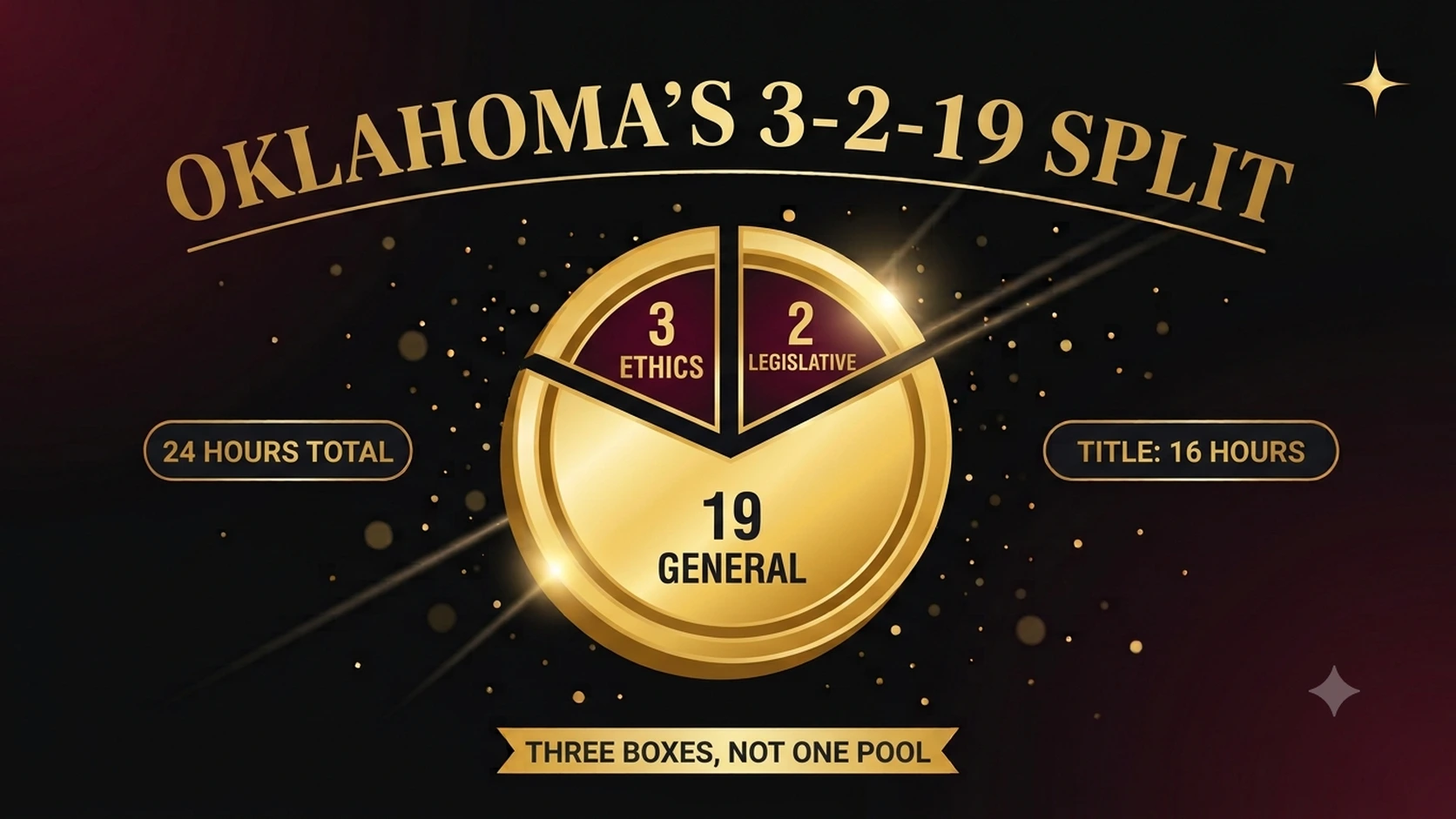
Oklahoma Insurance CE: The 3-2-19 Hour Split, and a Separate Track for Title Producers
Oklahoma divides its 24-hour requirement into three specific categories rather than one general pool, and title insurance producers follow an entirely different 16-hour structure.
↗
Connecticut Insurance CE: 24 Hours, Plus a New Flood Training Requirement Starting April 2026
Connecticut's 24-hour biennial requirement, its combined ethics-or-law carve-out, and the new one-time flood insurance training requirement taking effect for newly licensed P&C producers.
↗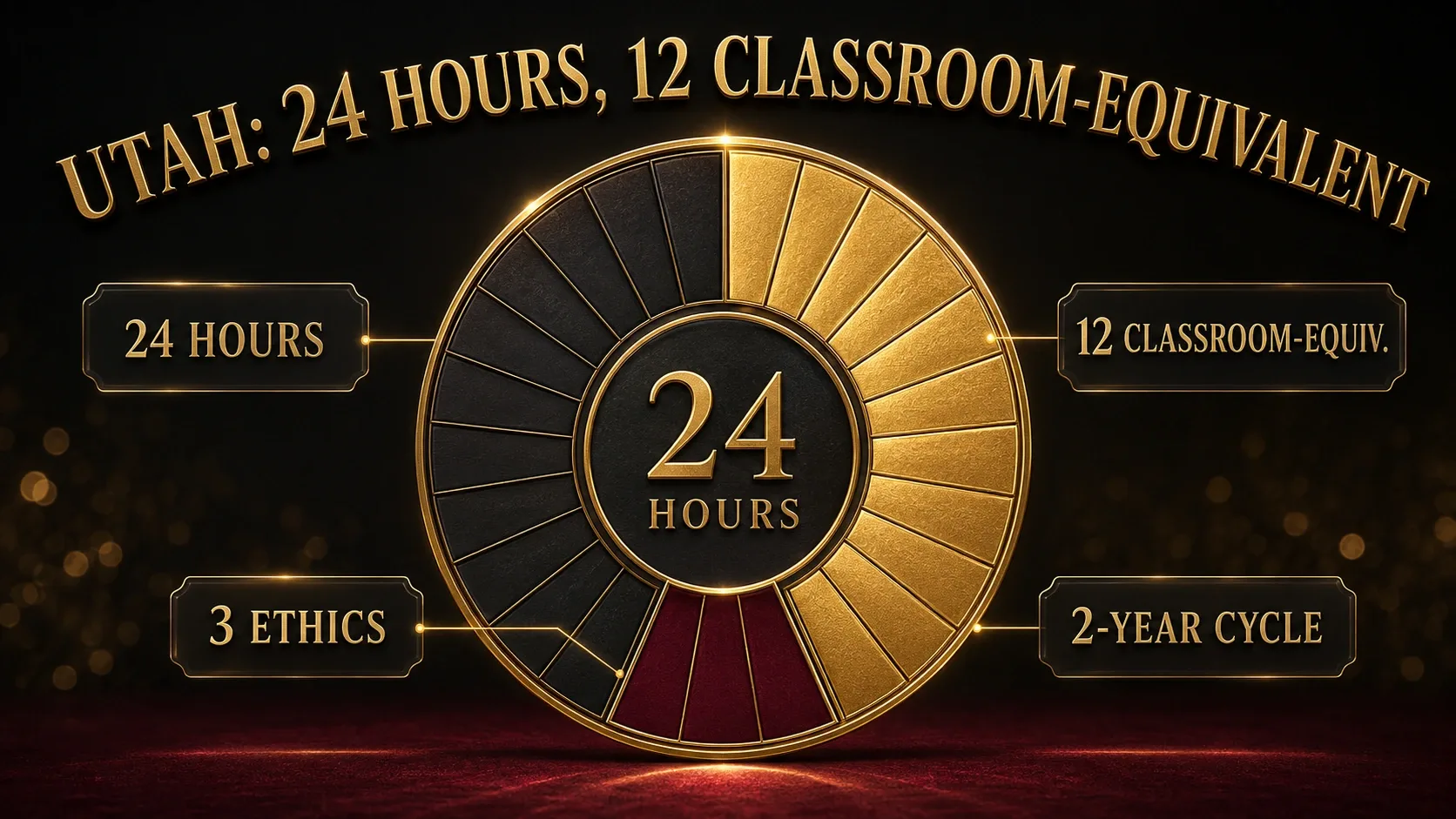
Utah Insurance CE: 24 Hours Every Two Years, Half of Them in a Classroom Format
Utah's biennial 24-hour producer CE requirement, the 12-hour classroom-equivalent minimum, the cap on insurer-provided hours, the June 2026 repeal of the long-term care training rule, and what reinstatement costs if the license lapses.
↗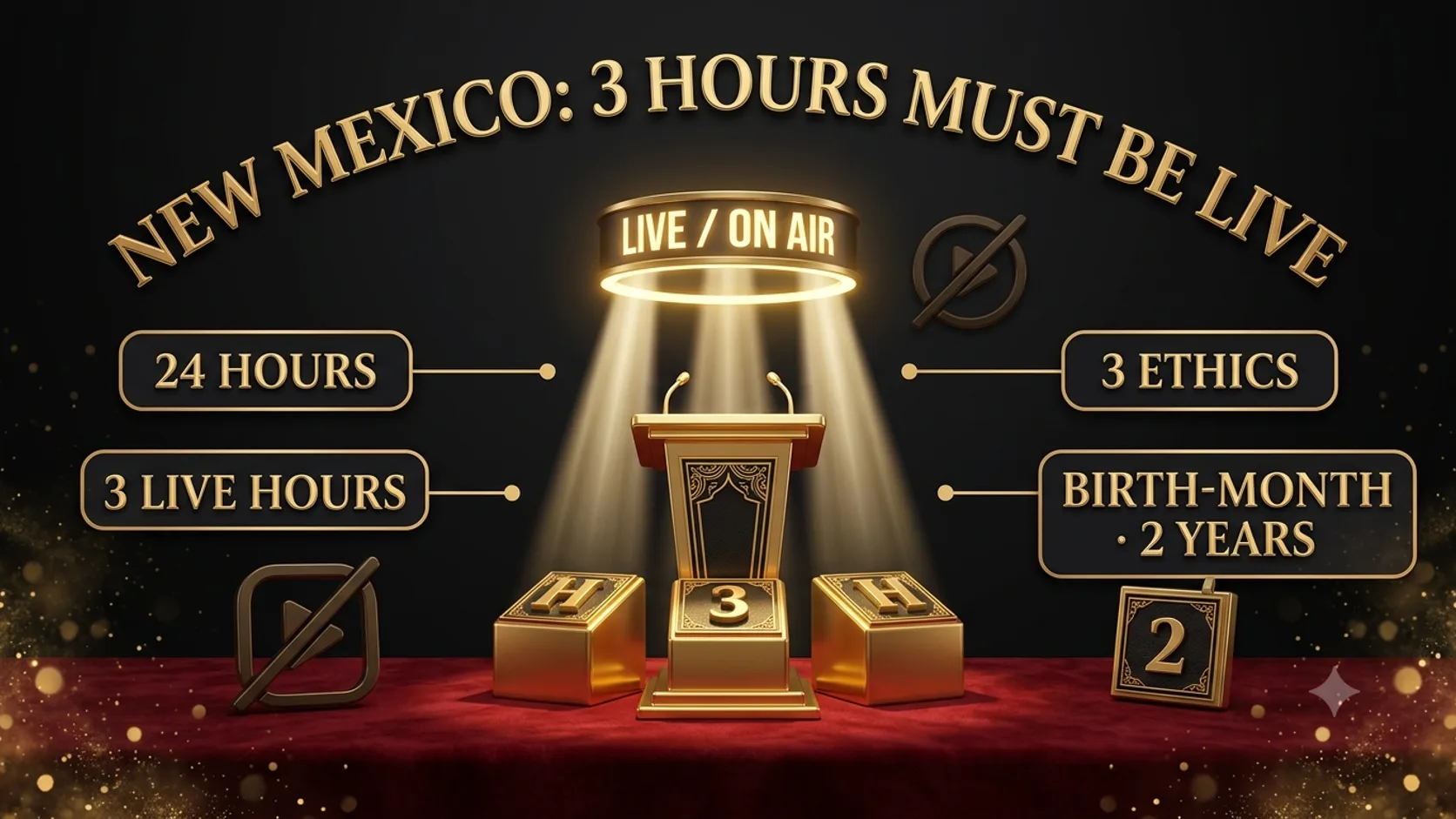
New Mexico Insurance CE: 24 Hours on a Birth-Month Cycle, With a Live-Instruction Minimum
New Mexico's biennial 24-hour producer CE requirement, the 3-hour live classroom or webinar minimum, the birth-month renewal cycle keyed to birth-year parity, the $50 CE non-completion penalty, and the graduated late-renewal fees.
↗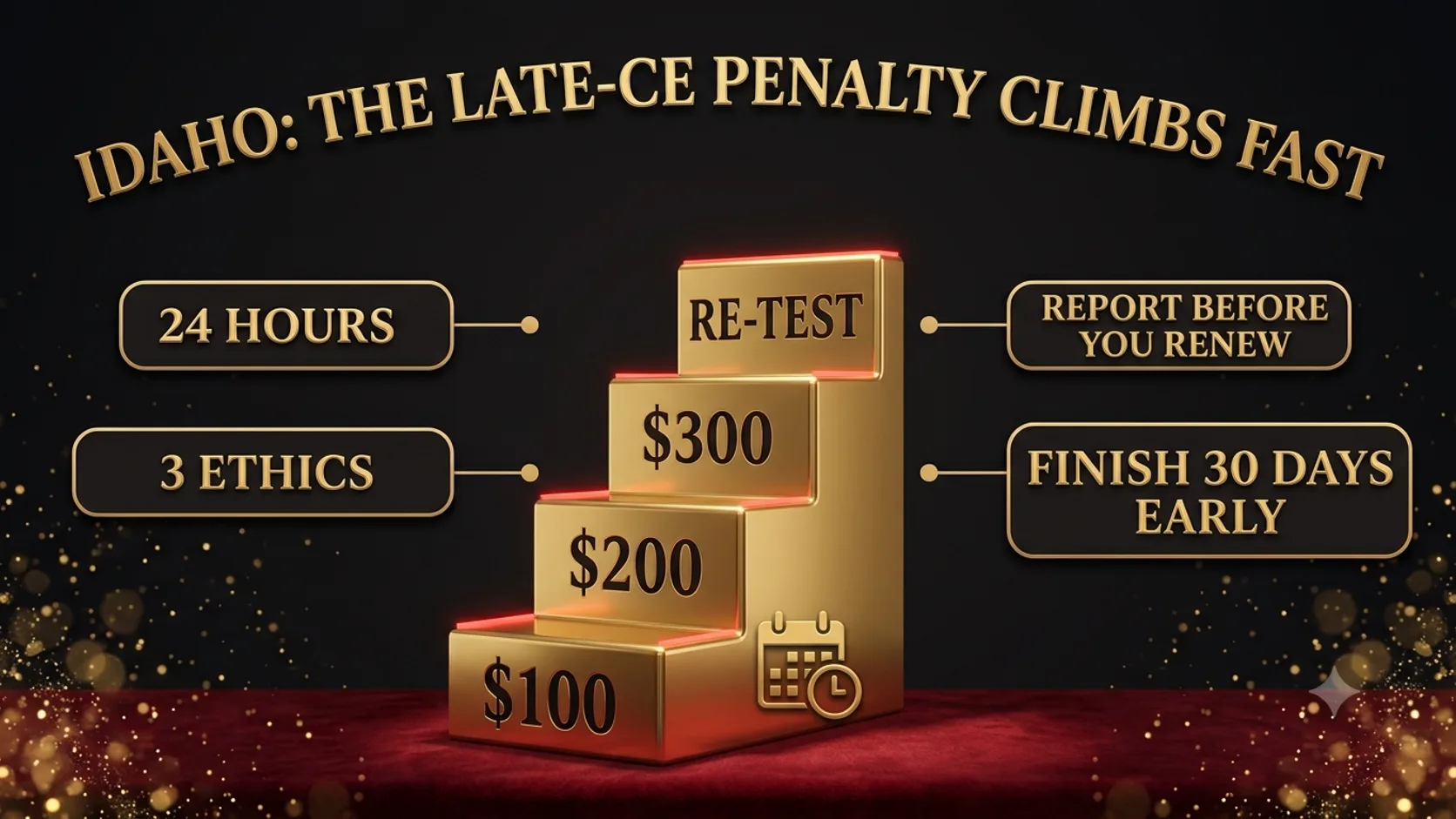
Idaho Insurance CE: 24 Hours Every Two Years, Reported Before You Can Renew
Idaho's biennial 24-hour producer CE requirement, the 3-hour ethics minimum, the rule that CE must post before a renewal can be filed, and Idaho's unusually detailed schedule of graduated CE-deficiency penalties.
↗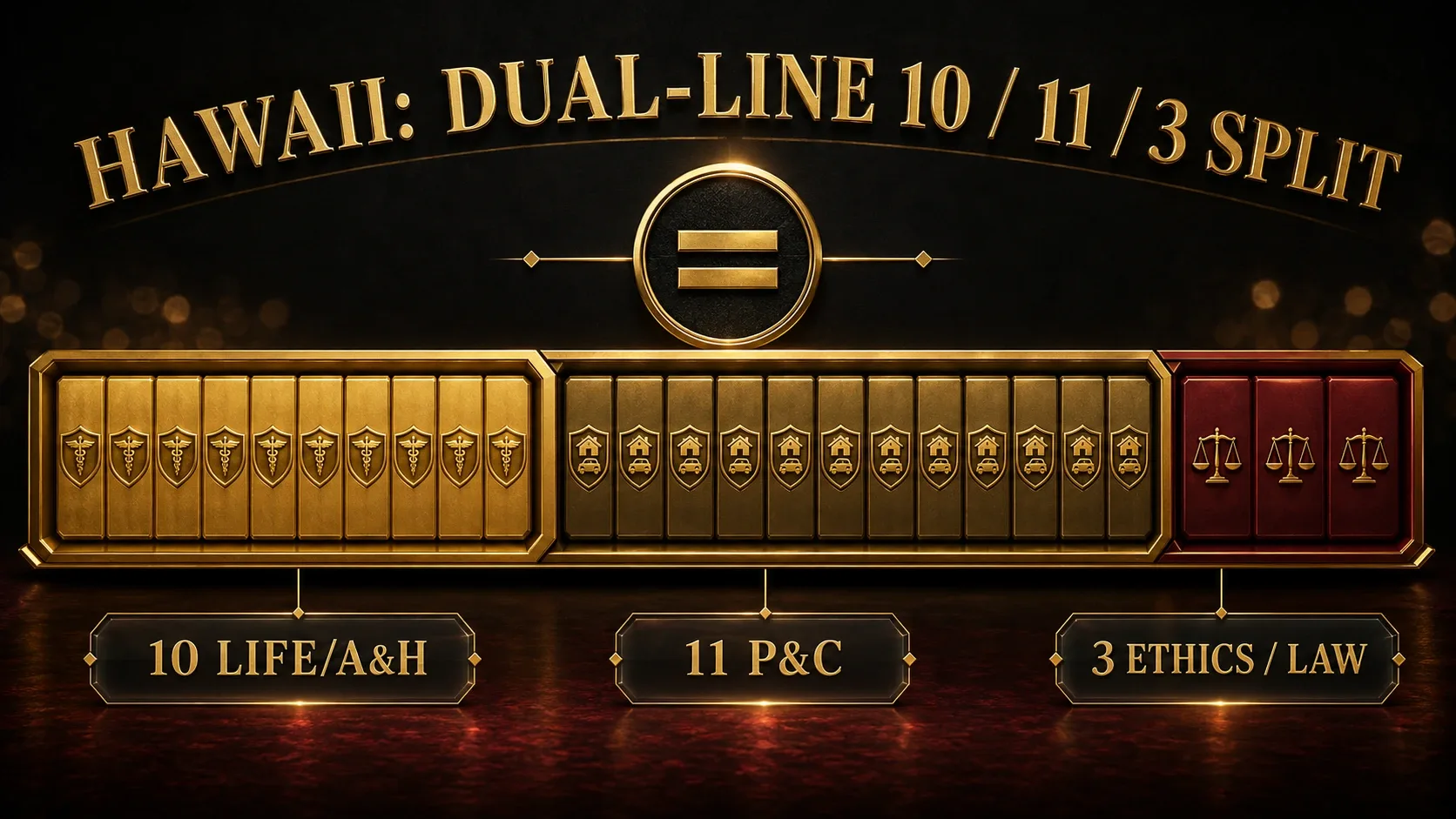
Hawaii Insurance CE: 24 Hours Every Two Years, With a Line-Split for Multi-Line Producers
Hawaii's biennial 24-hour producer CE requirement, the 3-hour ethics-or-law carve-out, the specific 10 L&H / 11 P&C split for dual-line producers, the birth-month renewal cycle, and the no-grace-period reinstatement path.
↗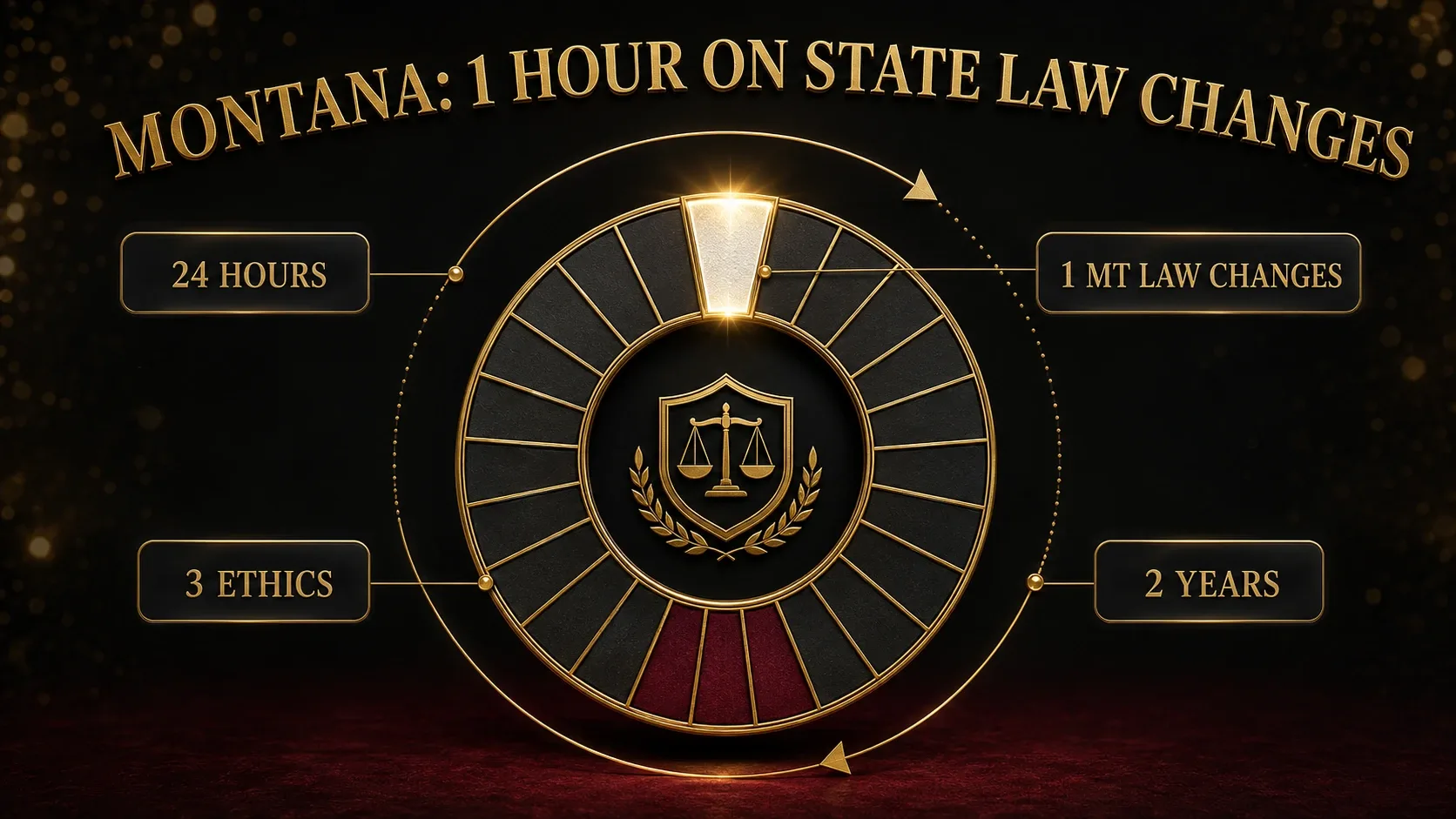
Montana Insurance CE: 24 Hours Every Two Years, Including One Hour on State Legislative Changes
Montana's biennial 24-hour producer CE requirement, the 3-hour ethics carve-out plus the distinctive 1-hour Montana legislative-changes requirement, the first-day-of-birth-month deadline, and the one-year grace period after a $100 late fee.
↗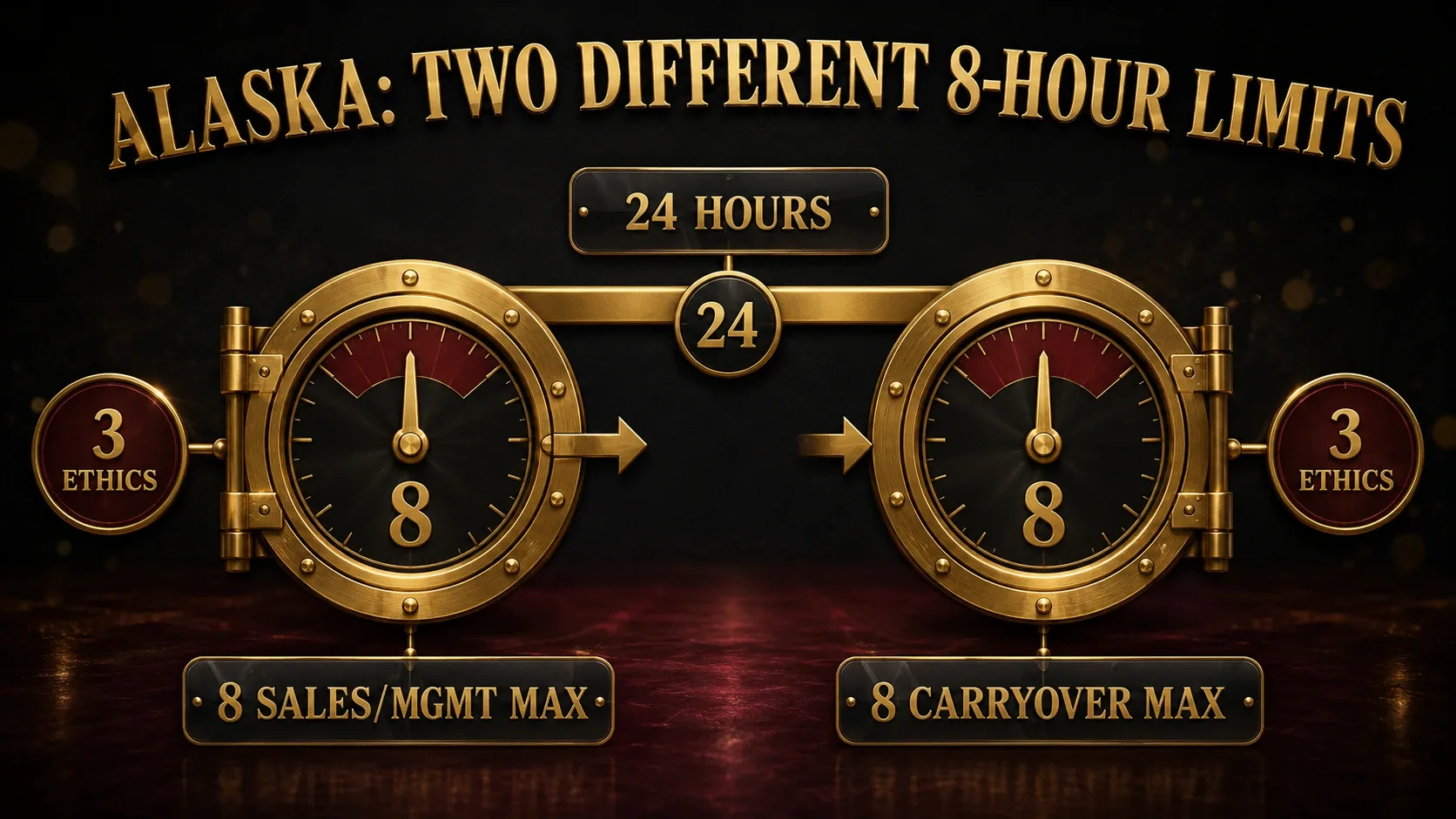
Alaska Insurance CE: 24 Hours Every Two Years, With Up to 8 Excess Hours Allowed to Carry Forward
Alaska's biennial 24-hour producer CE requirement, the 8-hour carryover allowance that makes Alaska unusual, the 8-hour cap on management courses, the birth-month renewal cycle, and the graduated reinstatement fees.
↗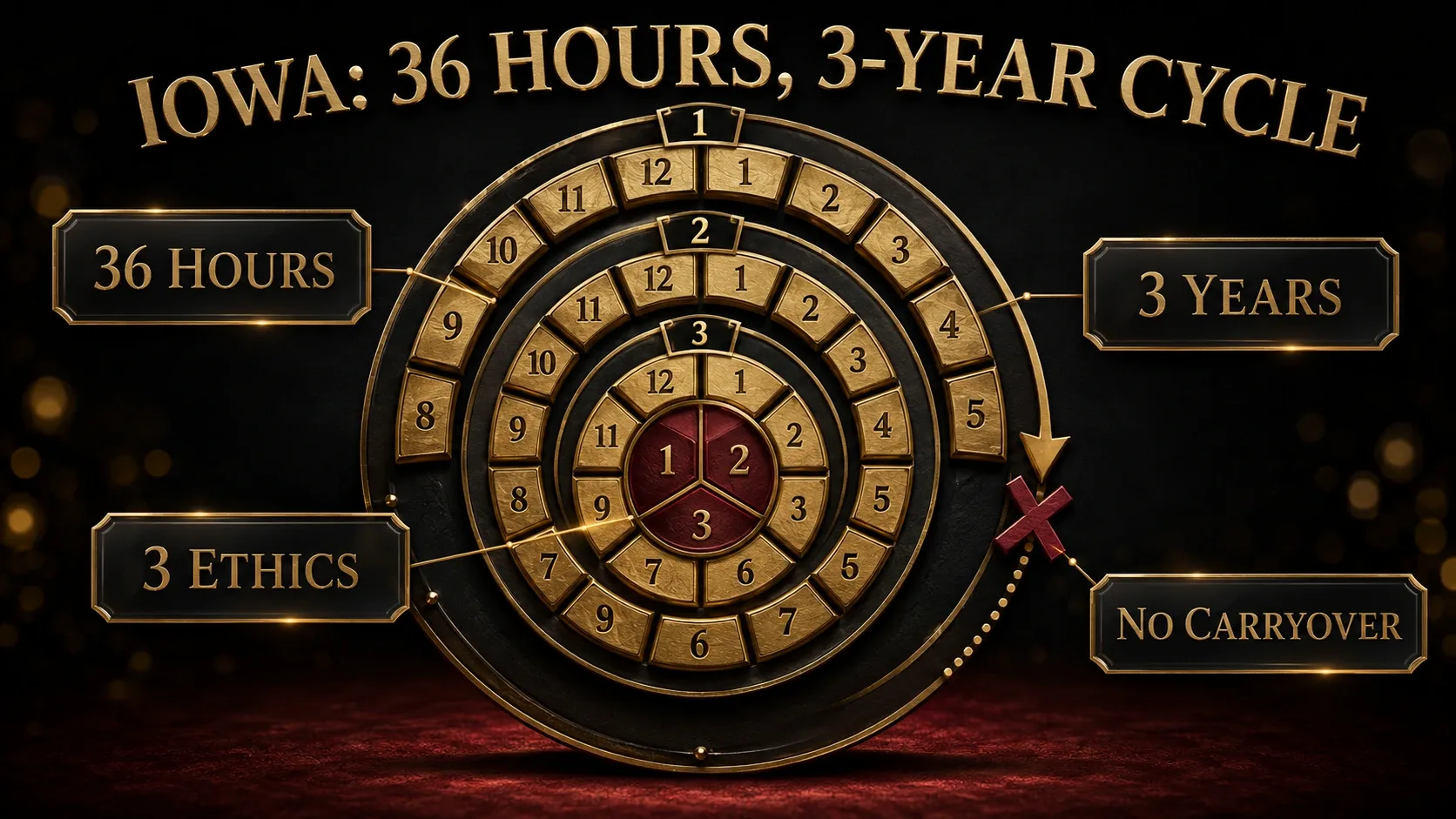
Iowa Insurance CE: 36 Hours Every Three Years, Not 24 Every Two
Iowa's triennial 36-hour producer CE requirement — a three-year cycle that is unusual on its own — the 3-hour ethics carve-out, the reduced 18-hour requirement for crop-only producers, and the reinstatement path within 12 months.
↗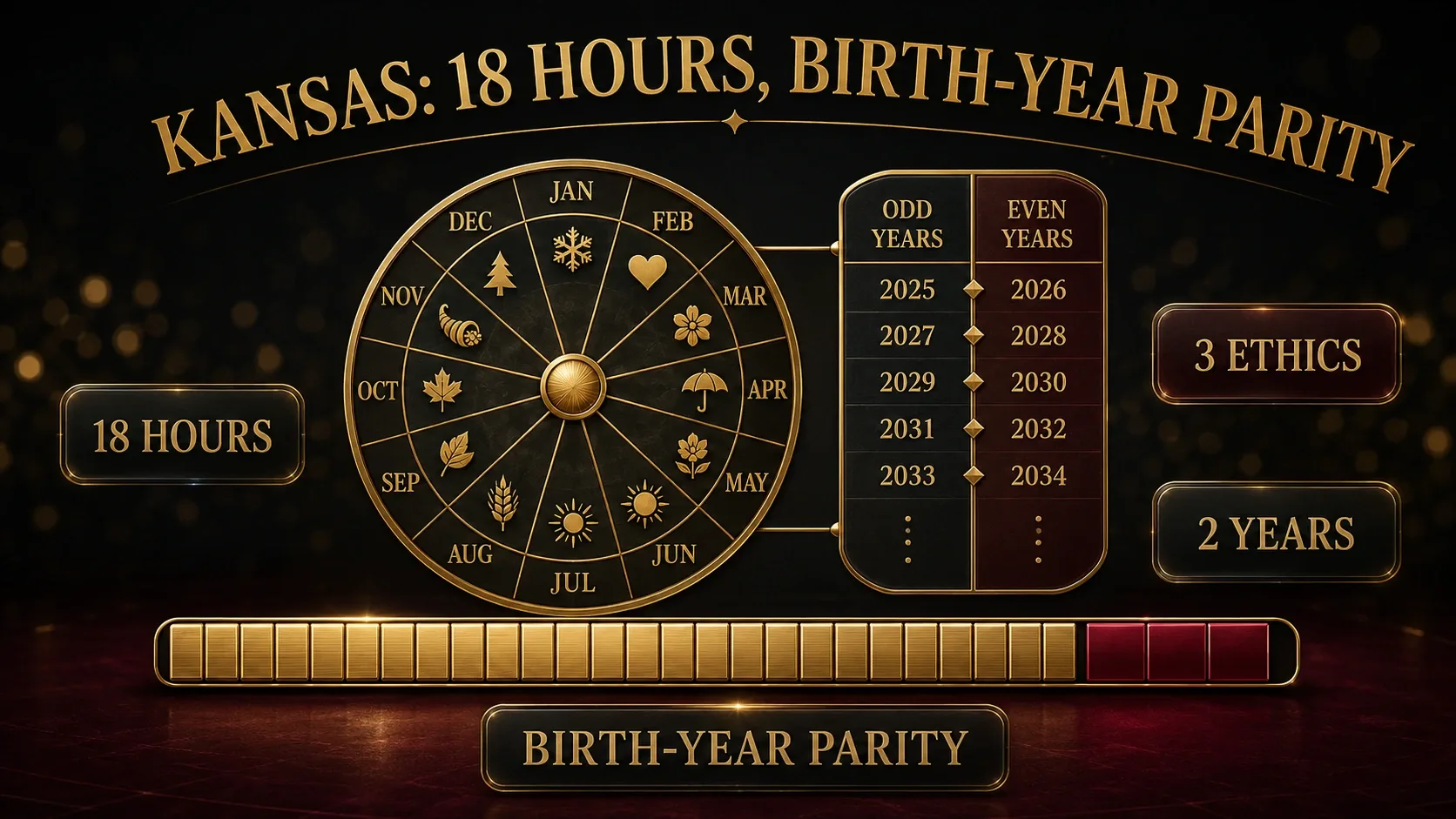
Kansas Insurance CE: Only 18 Hours Every Two Years, but a Missed Deadline Suspends the License Automatically
Kansas's biennial 18-hour producer CE requirement — lower than the 24 most states use — the 3-hour ethics carve-out, the automatic 90-day suspension and $100 penalty for a late CE report, and the 10-day no-penalty late-renewal window.
↗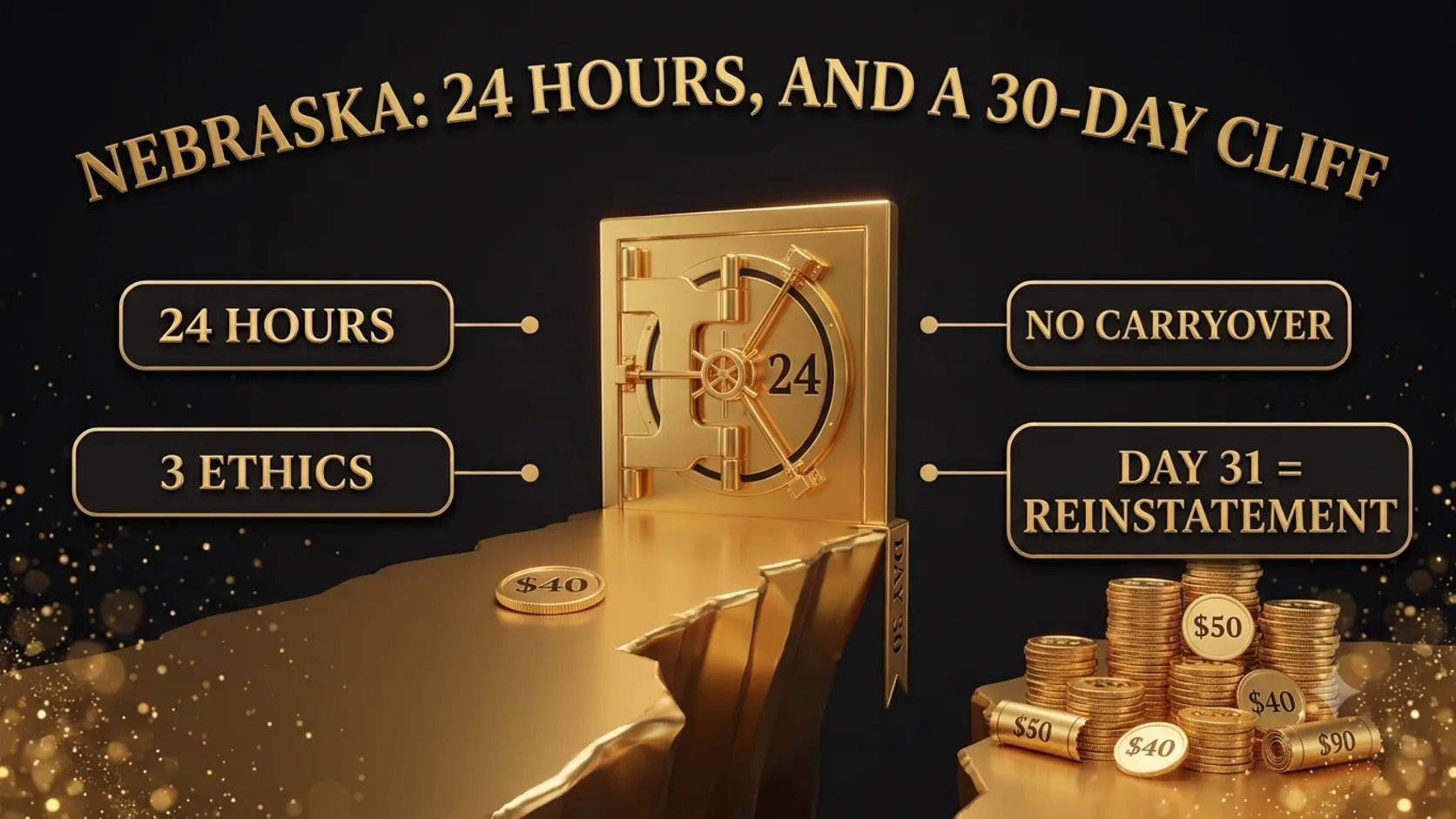
Nebraska Insurance CE: 24 Hours Every Two Years on a Birth-Month Cycle
Nebraska's biennial 24-hour producer CE requirement, the 3-hour ethics carve-out, the line-of-authority match, the birth-month renewal cycle, and the 31-day-to-one-year reinstatement path with a $90 fee.
↗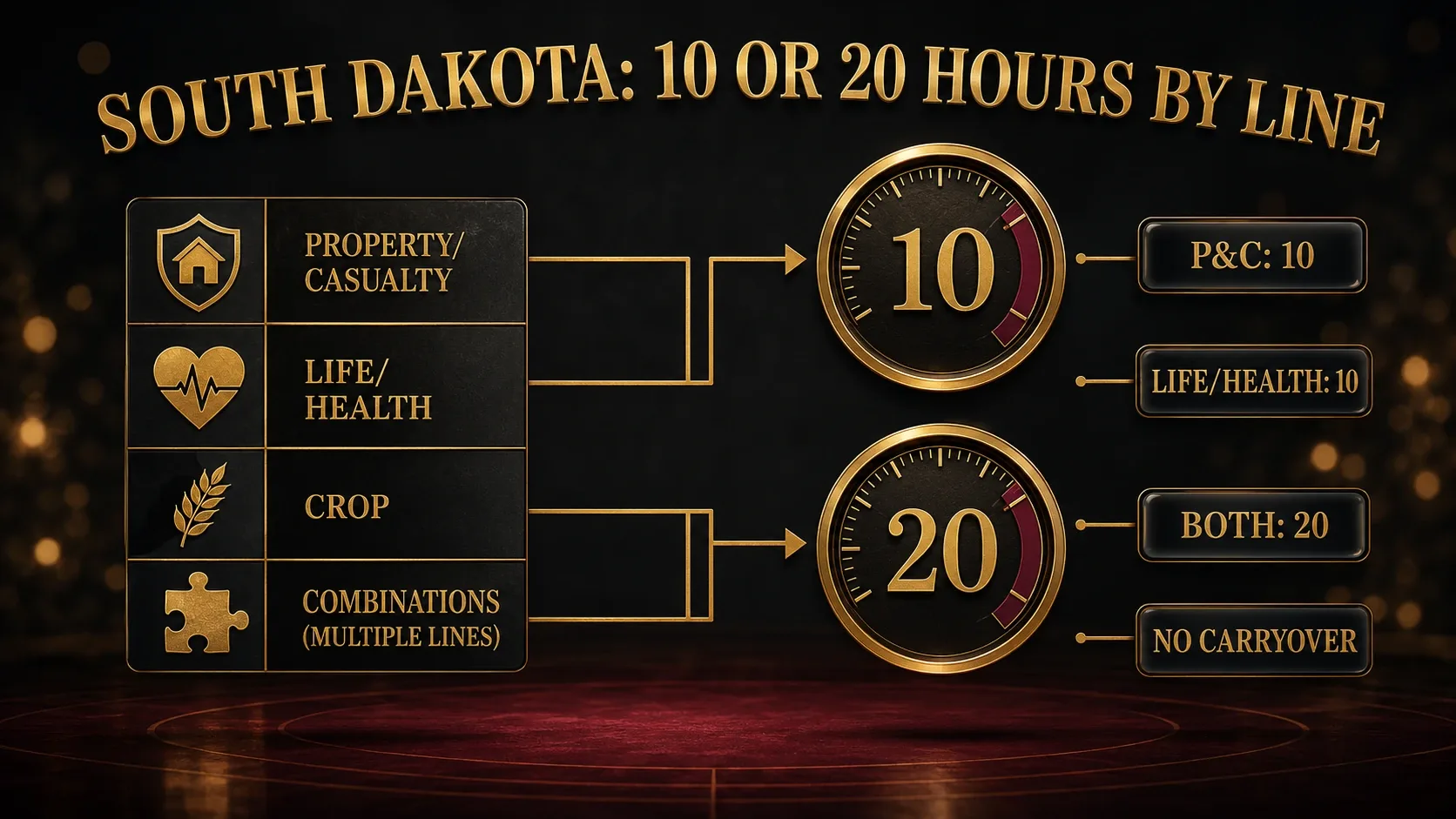
South Dakota Insurance CE: Per-Line Hours, No Ethics Requirement, but Separate Annuity and LTC Training
South Dakota's per-line CE structure — 10 hours per major line, 20 for a combined license — with no statewide ethics requirement, plus the one-time annuity best-interest course, the long-term care training schedule, and the good-cause CE extension.
↗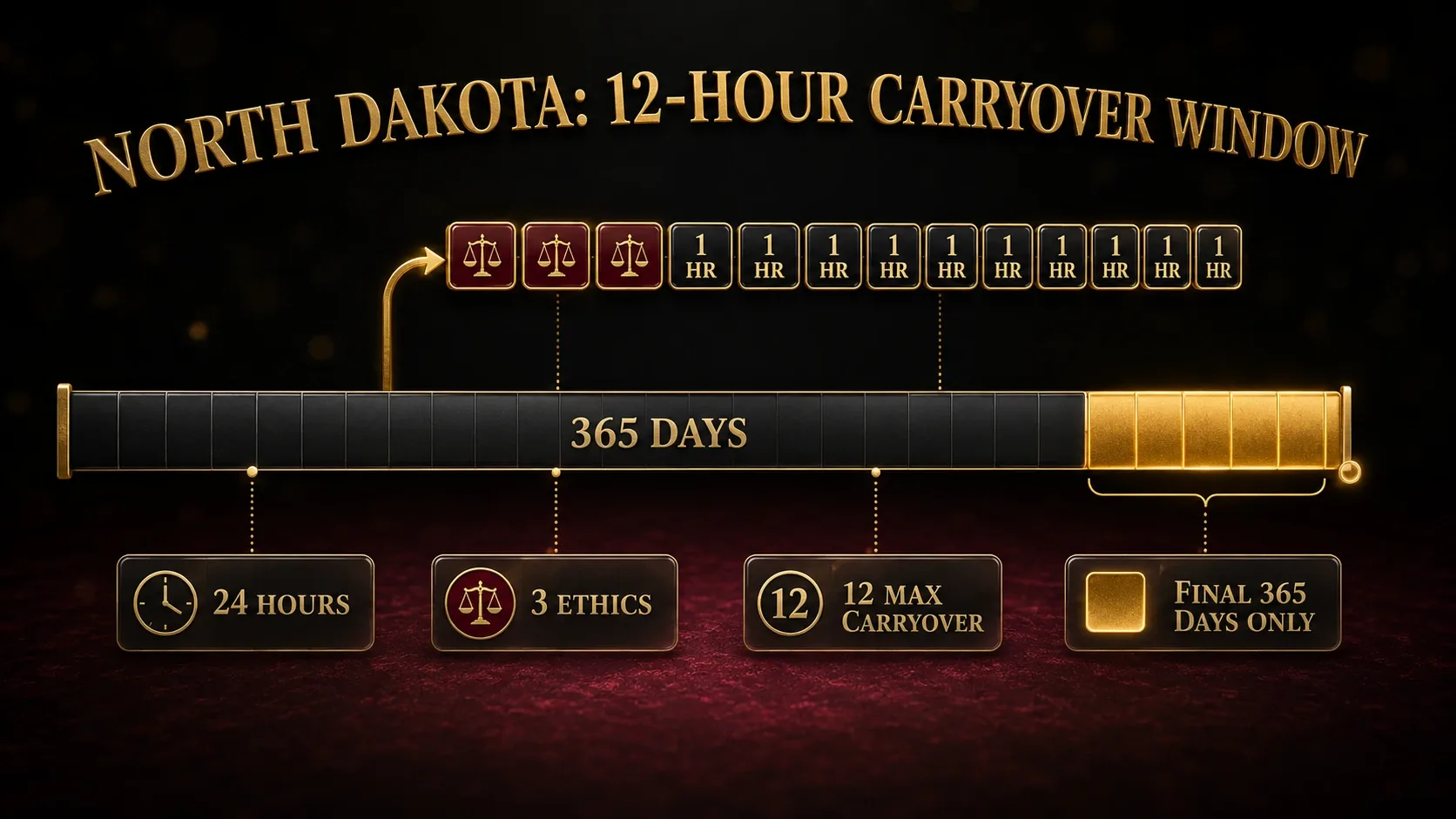
North Dakota Insurance CE: 24 Hours Every Two Years, With Up to 12 Hours Allowed to Carry Forward
North Dakota's biennial 24-hour producer CE requirement, the 3-hour ethics carve-out, the 12-hour carryover for surplus earned late in a period, the CE exemption for limited-lines-only producers, and the cancel-and-reapply consequence of a missed deadline.
↗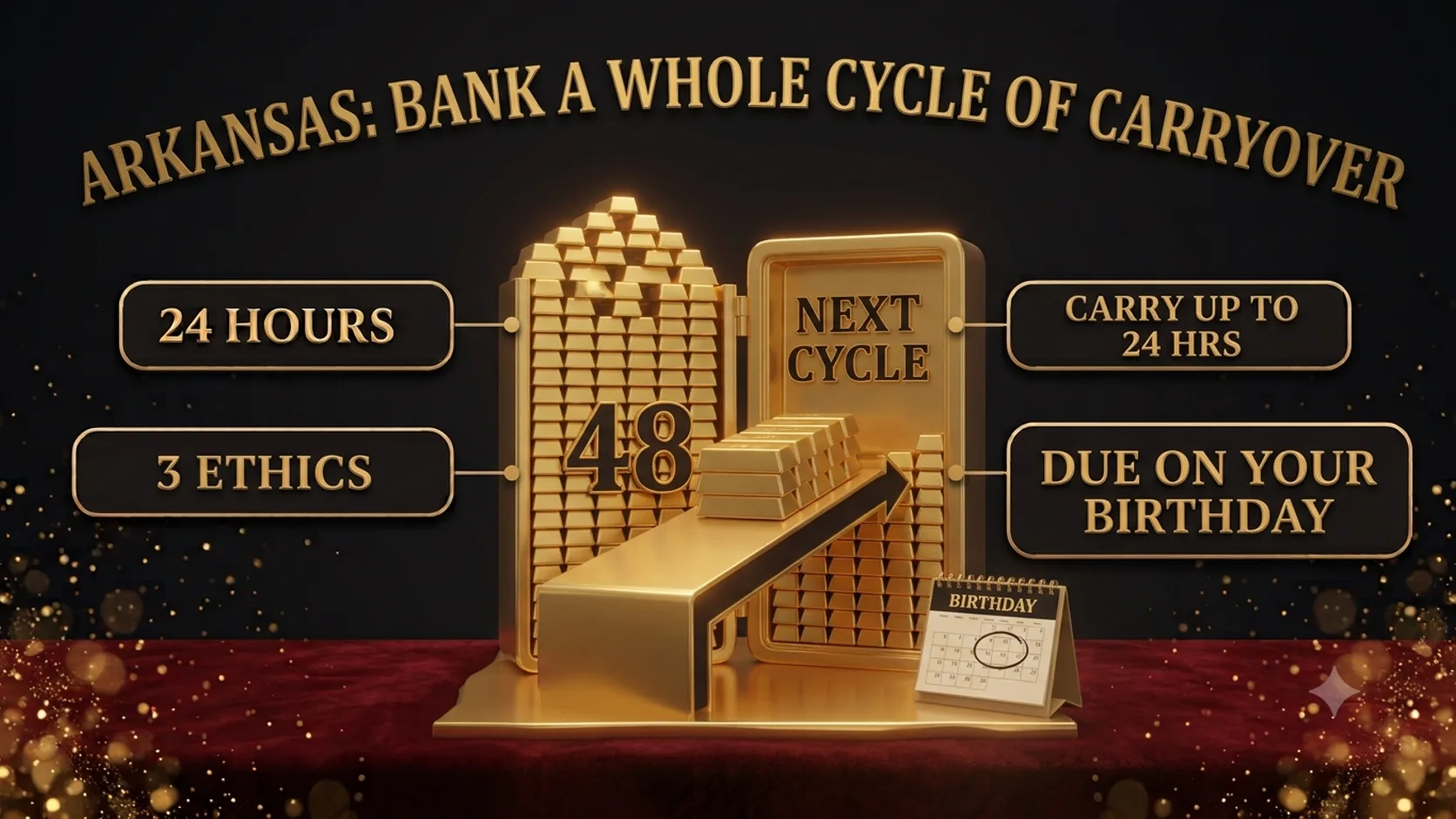
Arkansas Insurance CE: 24 Hours Every Two Years, Due on Your Birthday, With a Full 24-Hour Carryover
Arkansas's biennial 24-hour producer CE requirement, the 3-hour ethics carve-out, the allowance to carry forward up to 24 excess hours, the deadline keyed to the producer's actual birthday, and the double-fee penalty for a late renewal.
↗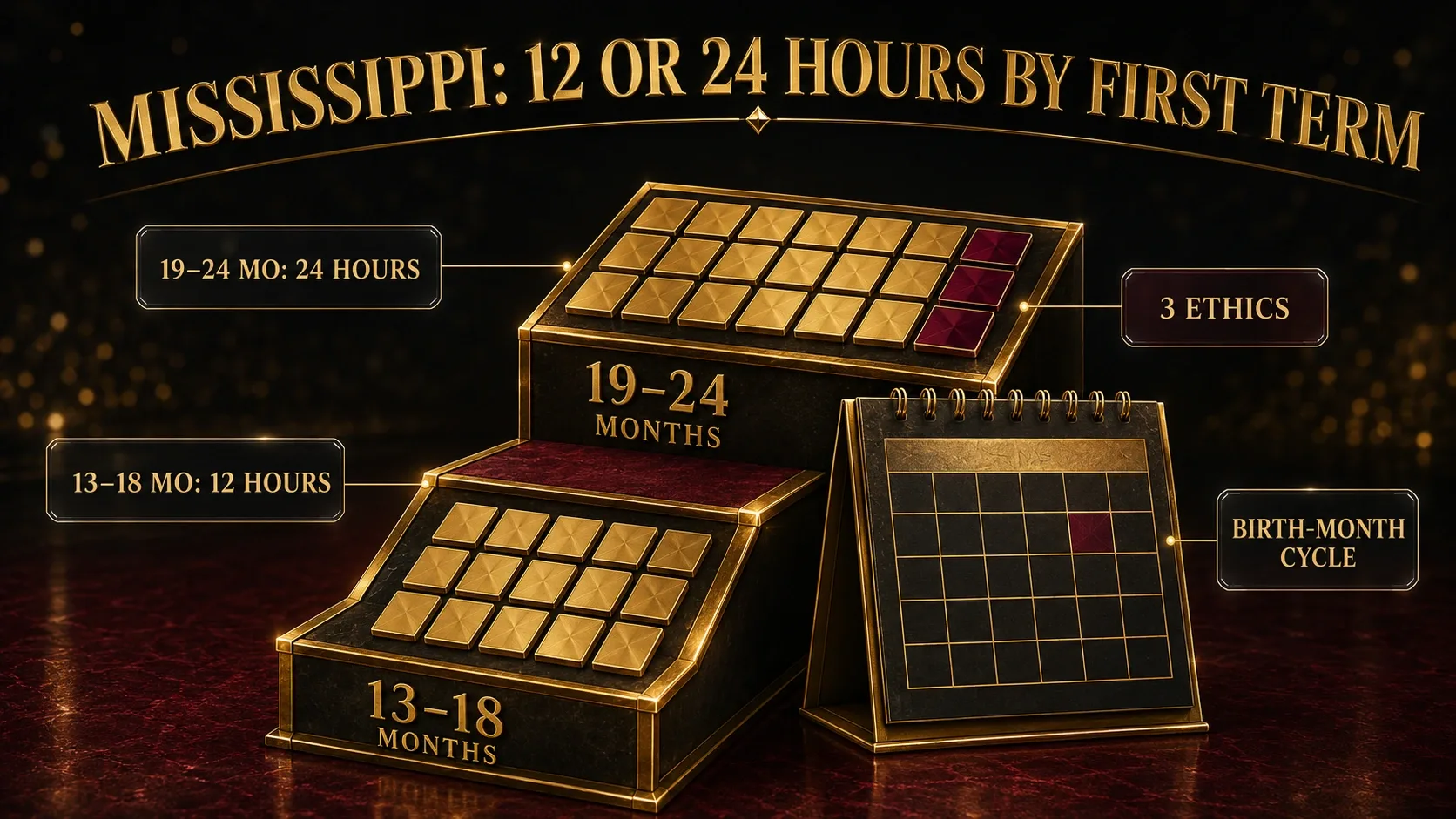
Mississippi Insurance CE: 24 Hours Every Two Years, With a Long-Service Exemption at Age 65
Mississippi's biennial 24-hour producer CE requirement, the reduced 12-hour requirement for a first term of 18 months or less, the exemption for producers over 65 who have held a license continuously for 25 years, and the SIRCON reinstatement path.
↗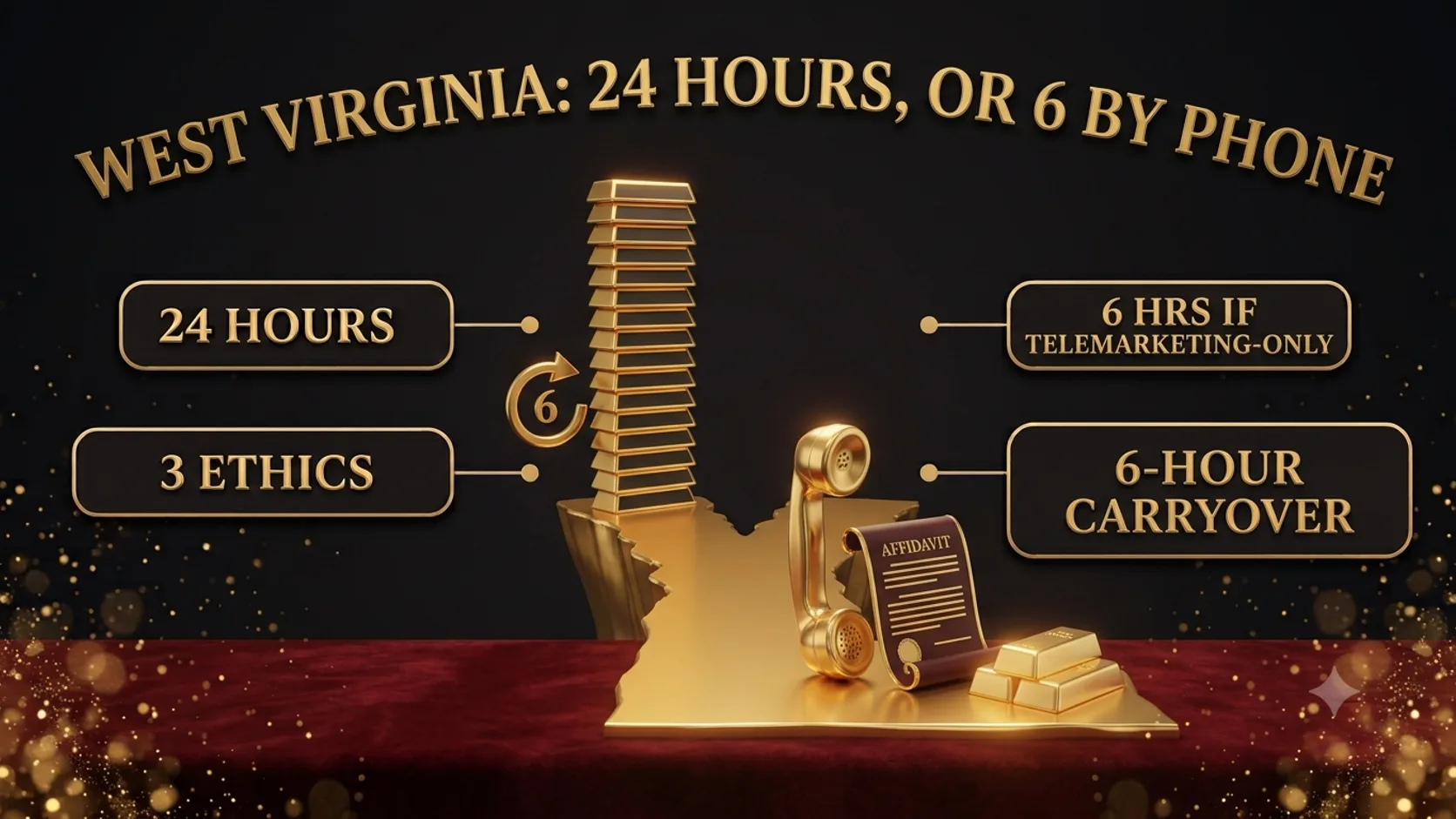
West Virginia Insurance CE: 24 Hours Every Two Years, With a 6-Hour Carryover and a Telemarketing Reduction
West Virginia's biennial 24-hour producer CE requirement, the 3-hour ethics carve-out, the 6-hour carryover, the reduced 6-hour requirement for exclusively-telemarketing producers, and the military/hardship waiver.
↗
Delaware Insurance CE: 24 Hours by the End of February in Even Years — a Fixed Statewide Deadline
Delaware's biennial 24-hour producer CE requirement, the 3-hour ethics carve-out, the fixed statewide renewal deadline of the last day of February in even-numbered years, the 5-hour carryover, and the $200 late-CE fee.
↗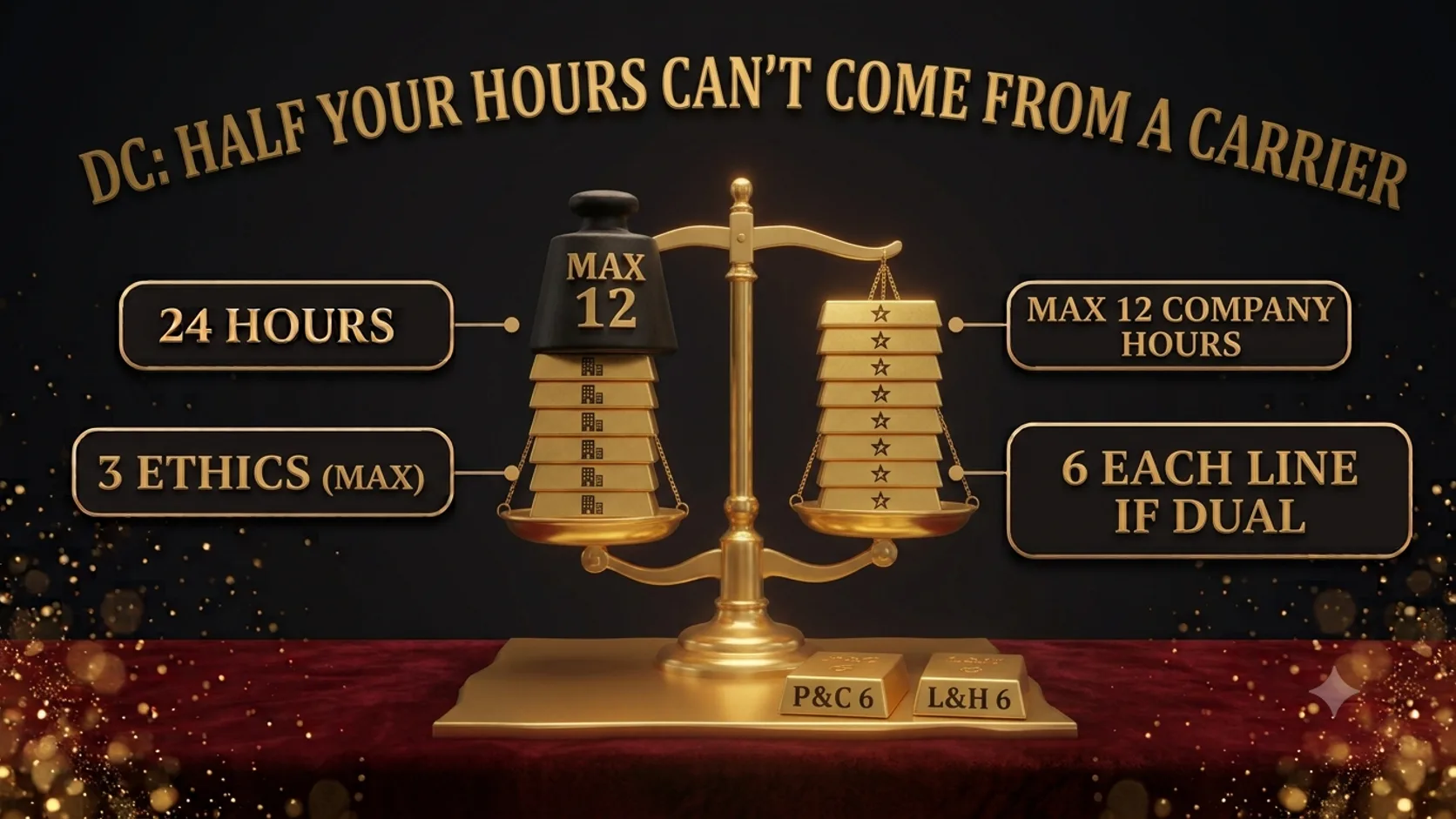
District of Columbia Insurance CE: 24 Hours Every Two Years, With a 50% Cap on Company Courses
The District of Columbia's biennial 24-hour producer CE requirement, the 3-hour ethics cap, the 50% ceiling on company-sponsored hours, the 6-hour-per-line minimum for dual-line producers, and the 30-day late-renewal window before the license lapses.
↗
New Hampshire Insurance CE: 24 Hours Every Two Years, First Renewal Exempt
New Hampshire's biennial 24-hour producer CE requirement, the 3-hour ethics minimum with a 10-hour ceiling on ethics credit, the exemption for a resident producer's first renewal, the 60-day early-completion rule, and the separate late-CE fee.
↗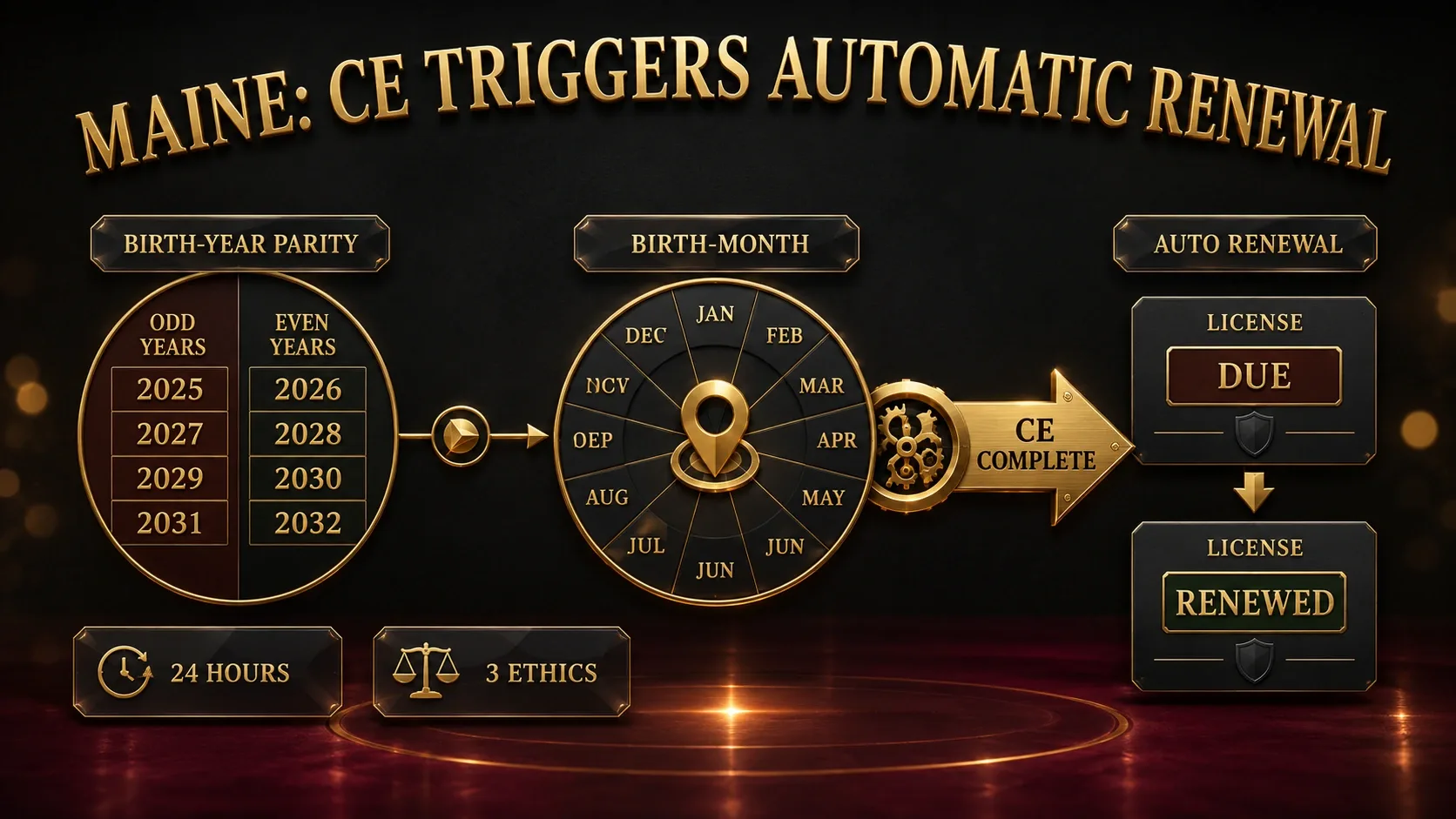
Maine Insurance CE: 24 Hours Every Two Years, With a 60-Day Window to Finish Late Without Losing the License
Maine's biennial 24-hour producer CE requirement under Rule 542, the 3-hour ethics minimum, the absence of any other subject requirement, the birth-month-and-year cycle, and the 60-day post-due-date window to complete outstanding CE with only a penalty.
↗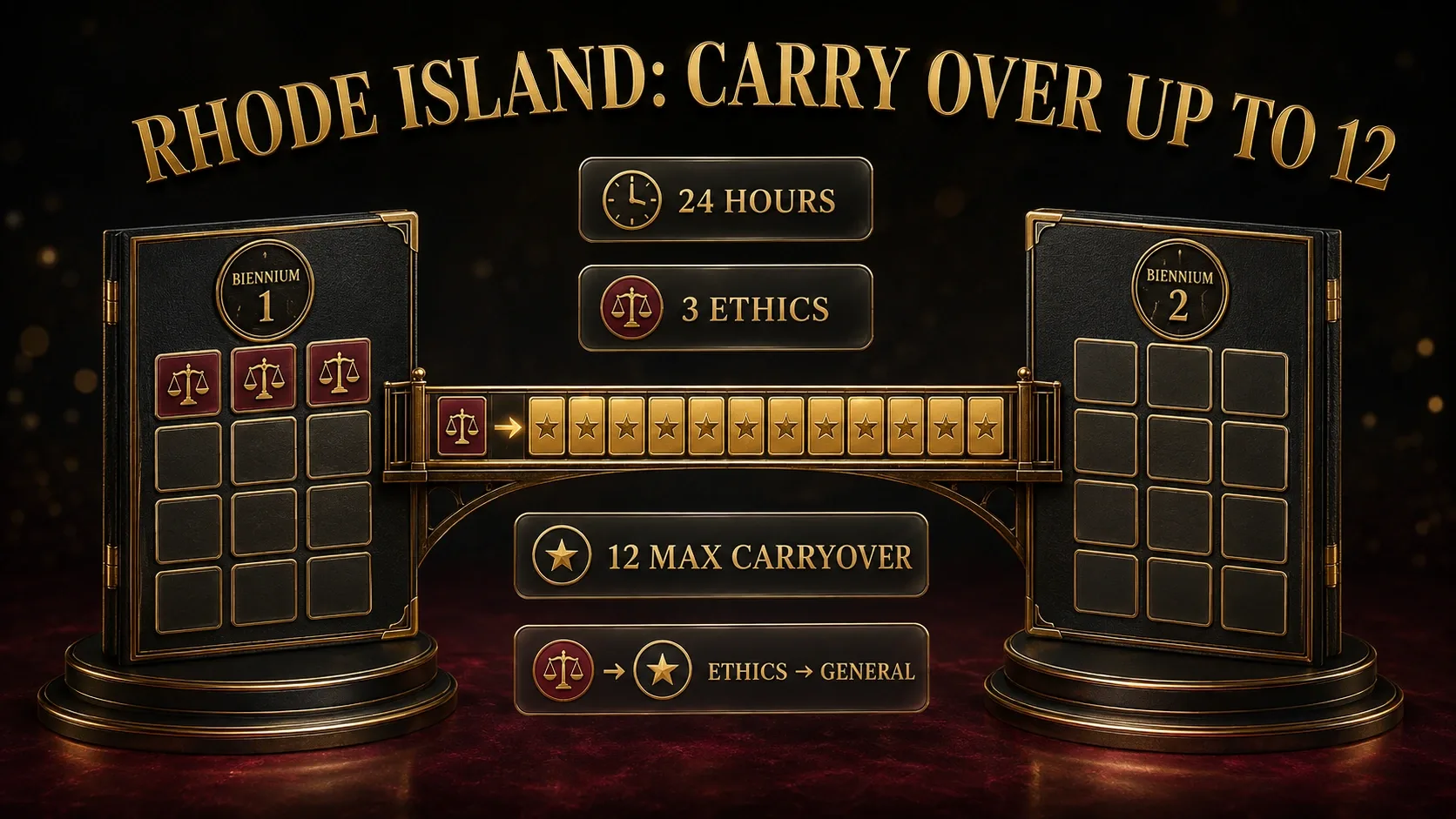
Rhode Island Insurance CE: 24 Hours Every Two Years, With a 12-Hour Carryover and a One-Time Flood Course
Rhode Island's biennial 24-hour producer CE requirement, the 3-hour ethics carve-out, the one-time 3-hour FEMA flood course for property/casualty producers, the 5-hour-per-line minimum, the 12-hour carryover, and the 30-day grace period.
↗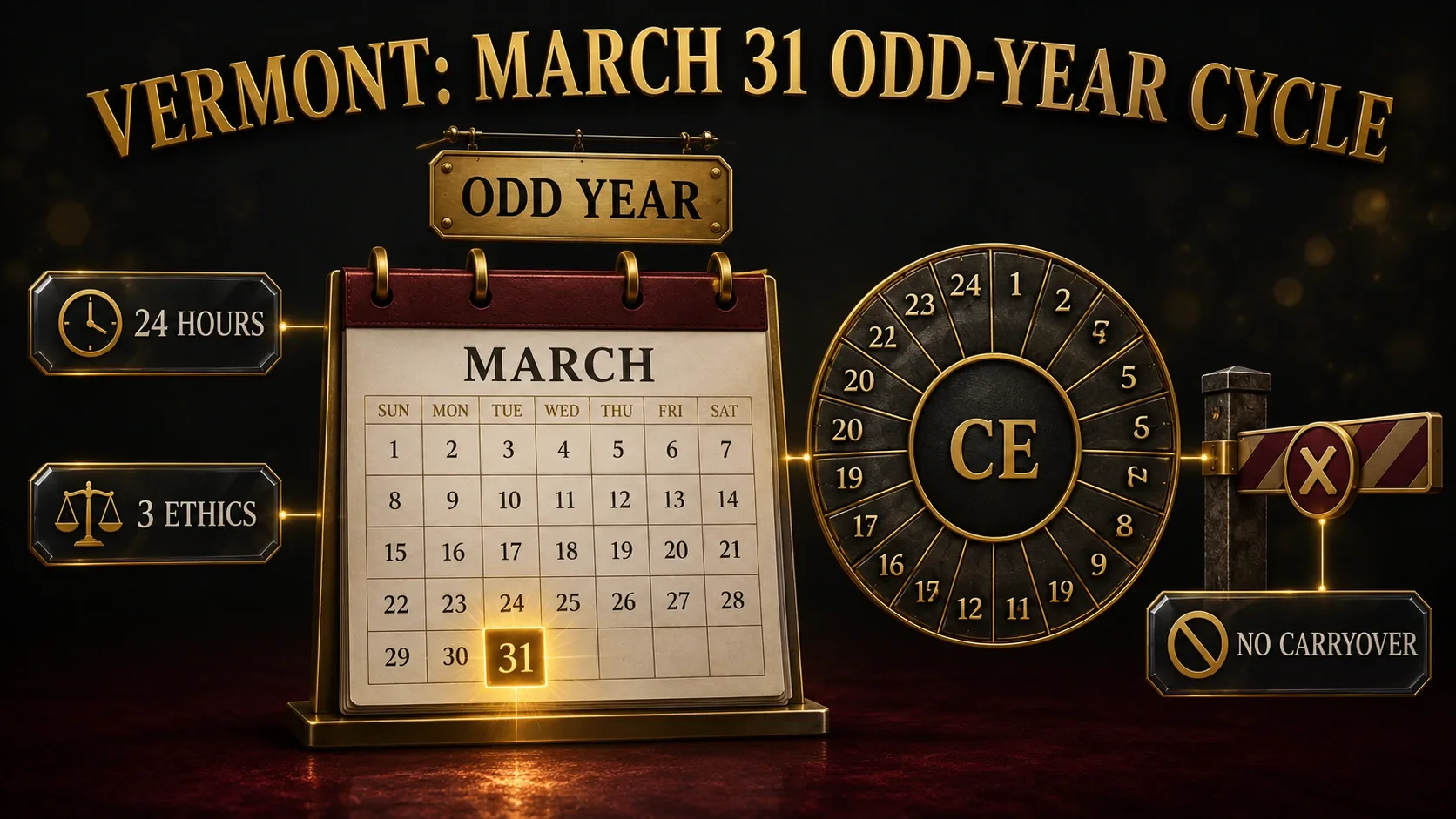
Vermont Insurance CE: 24 Hours by March 31 of Odd Years — a Fixed Statewide Deadline
Vermont's biennial 24-hour producer CE requirement, the 3-hour ethics carve-out, the one-time 3-hour flood course for property/casualty producers, the fixed statewide March 31 odd-year deadline, and the 14-day grace period.
↗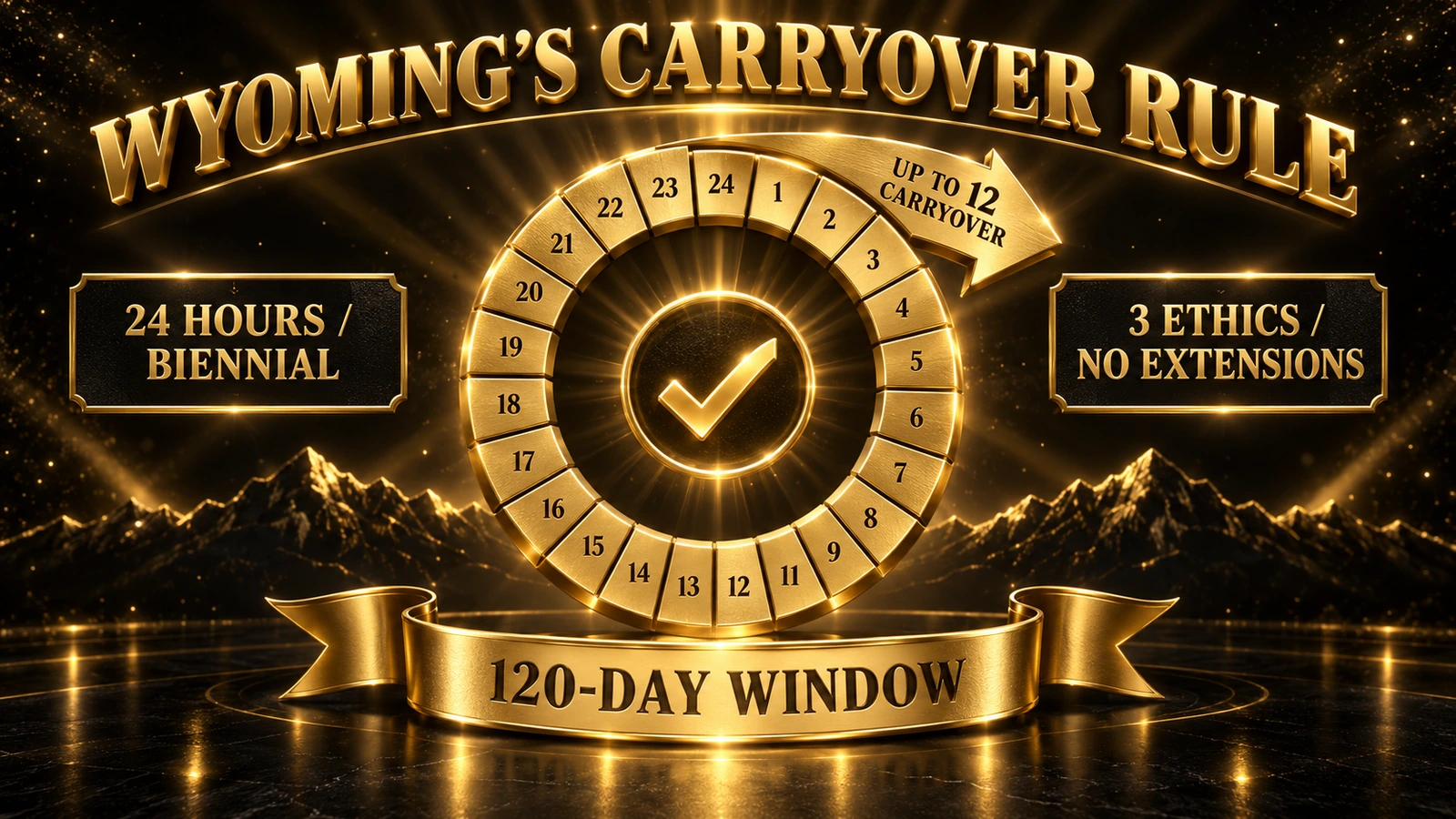
Wyoming Insurance CE: 24 Hours Every Two Years on a Birth-Month Cycle
Wyoming's biennial 24-hour producer CE requirement, the 3-hour ethics minimum, the birth-month renewal date, the 2023 carryover rule allowing up to 12 excess hours forward, and the one-year reinstatement window if a license lapses.
↗Specialty & compliance
12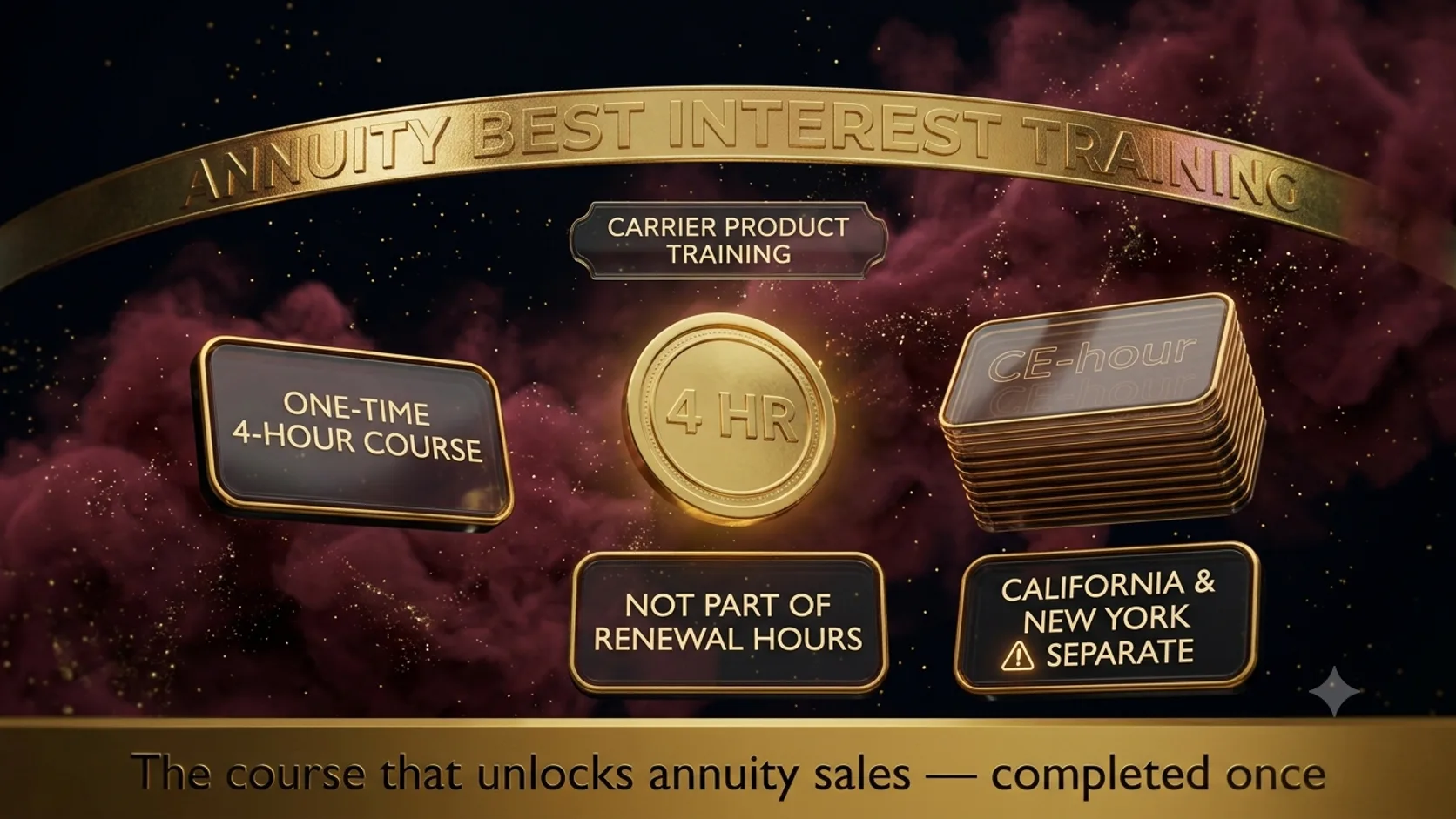
Annuity Best Interest Training: The One-Time 4-Hour Course That Sits Outside Your CE Hours
How the NAIC best-interest annuity training works, why it is separate from your renewal-cycle CE hours, whether an older 4-hour annuity course still counts, and why California and New York are handled on their own.
↗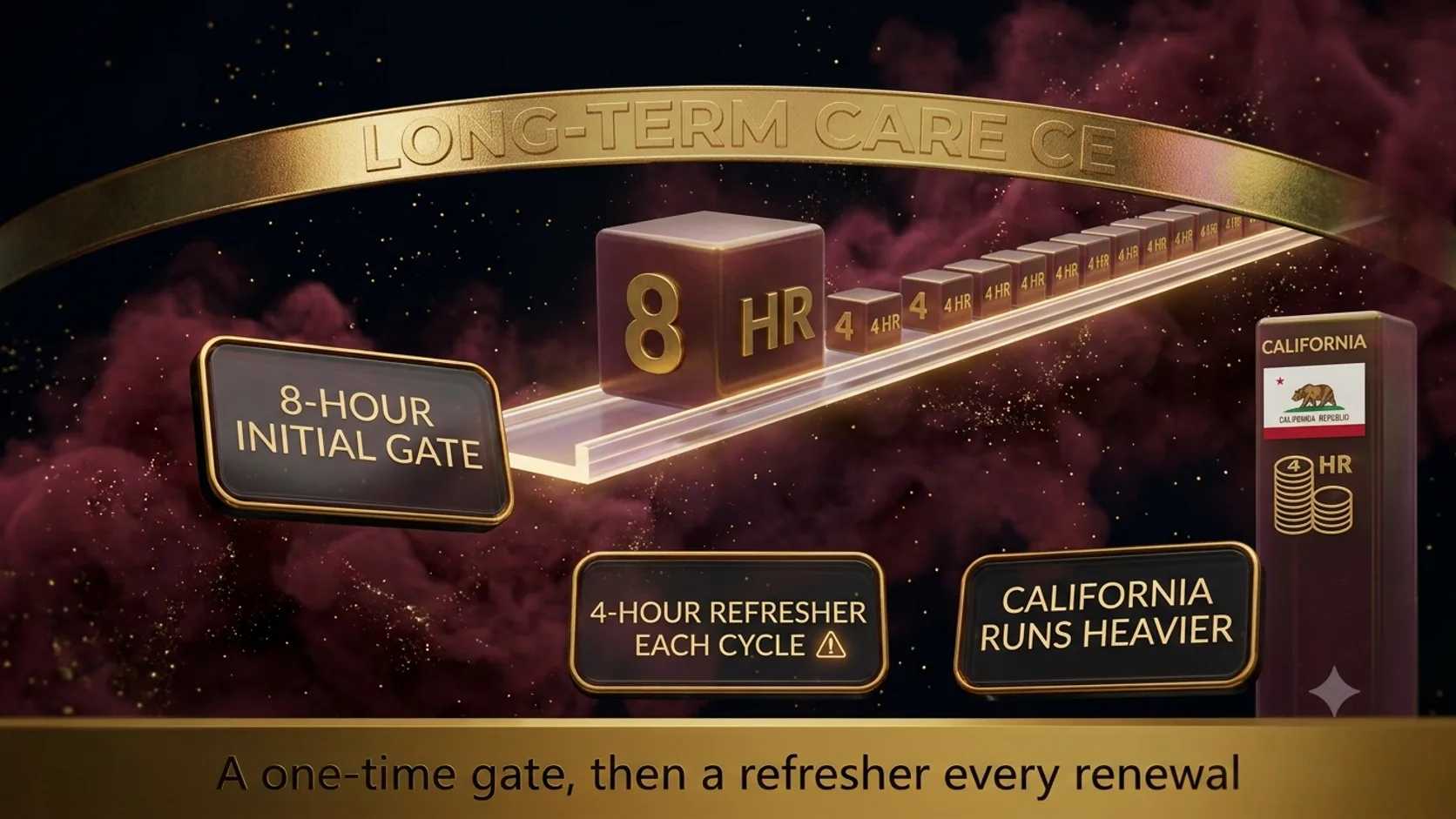
Long-Term Care CE: The 8-Hour Initial and 4-Hour Ongoing Training Most States Layer On Top
The two-tier long-term care training pattern from the NAIC model regulation, how partnership-policy training fits in, why California's version is heavier, and how the ongoing hours interact with your regular CE.
↗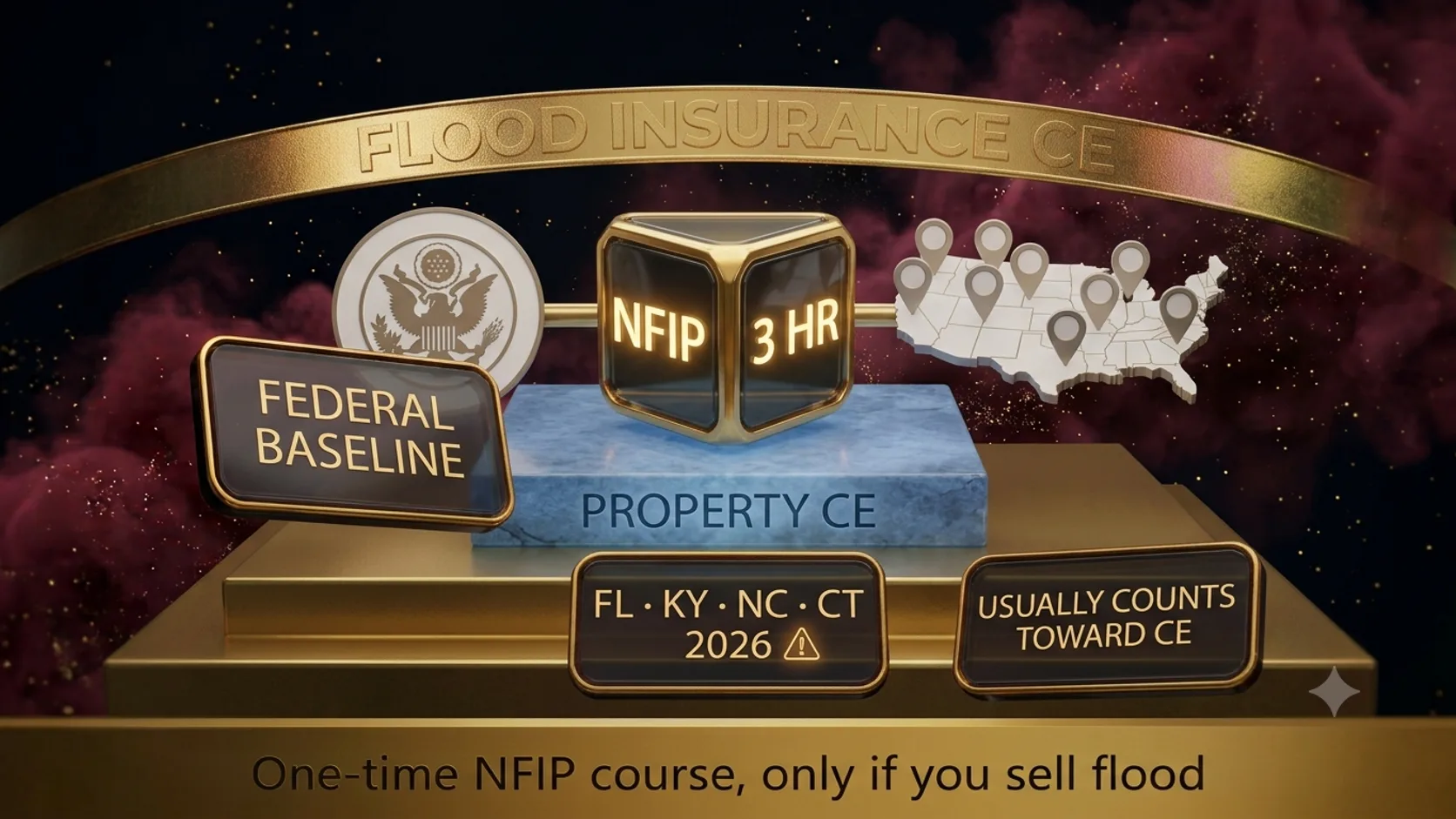
Flood Insurance CE: The Federal Baseline and the Handful of States That Add Their Own Course
Where the flood training requirement comes from, the states that impose a specific one-time NFIP course, which license types have to take it, and how it fits into your regular property CE hours.
↗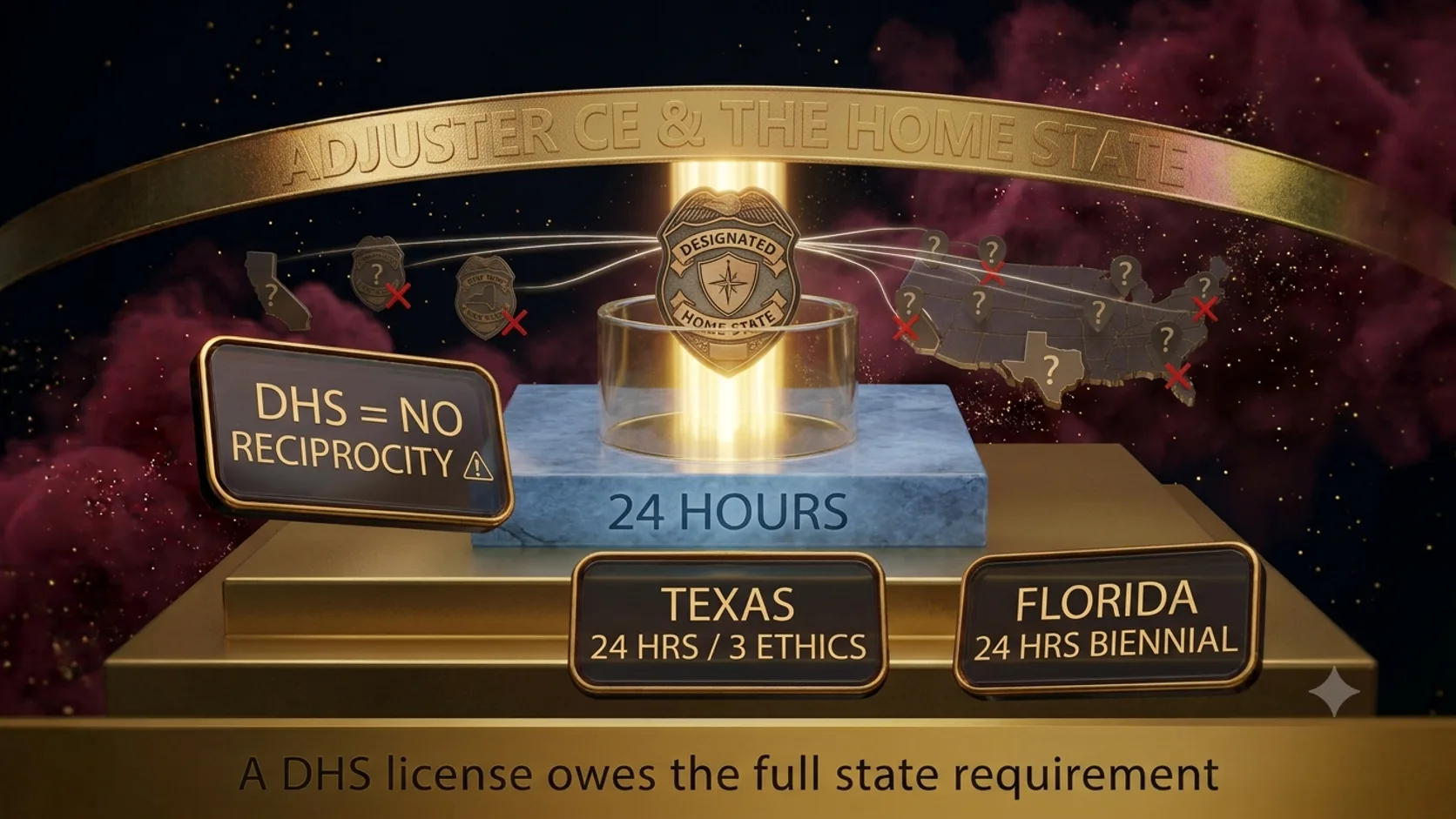
Adjuster CE and the Designated Home State: Why Non-Residents Sometimes Owe a Full State's Hours
How claims-adjuster CE differs from producer CE, what a designated home state license is, and why DHS adjusters in Texas and Florida cannot use the usual non-resident CE reciprocity.
↗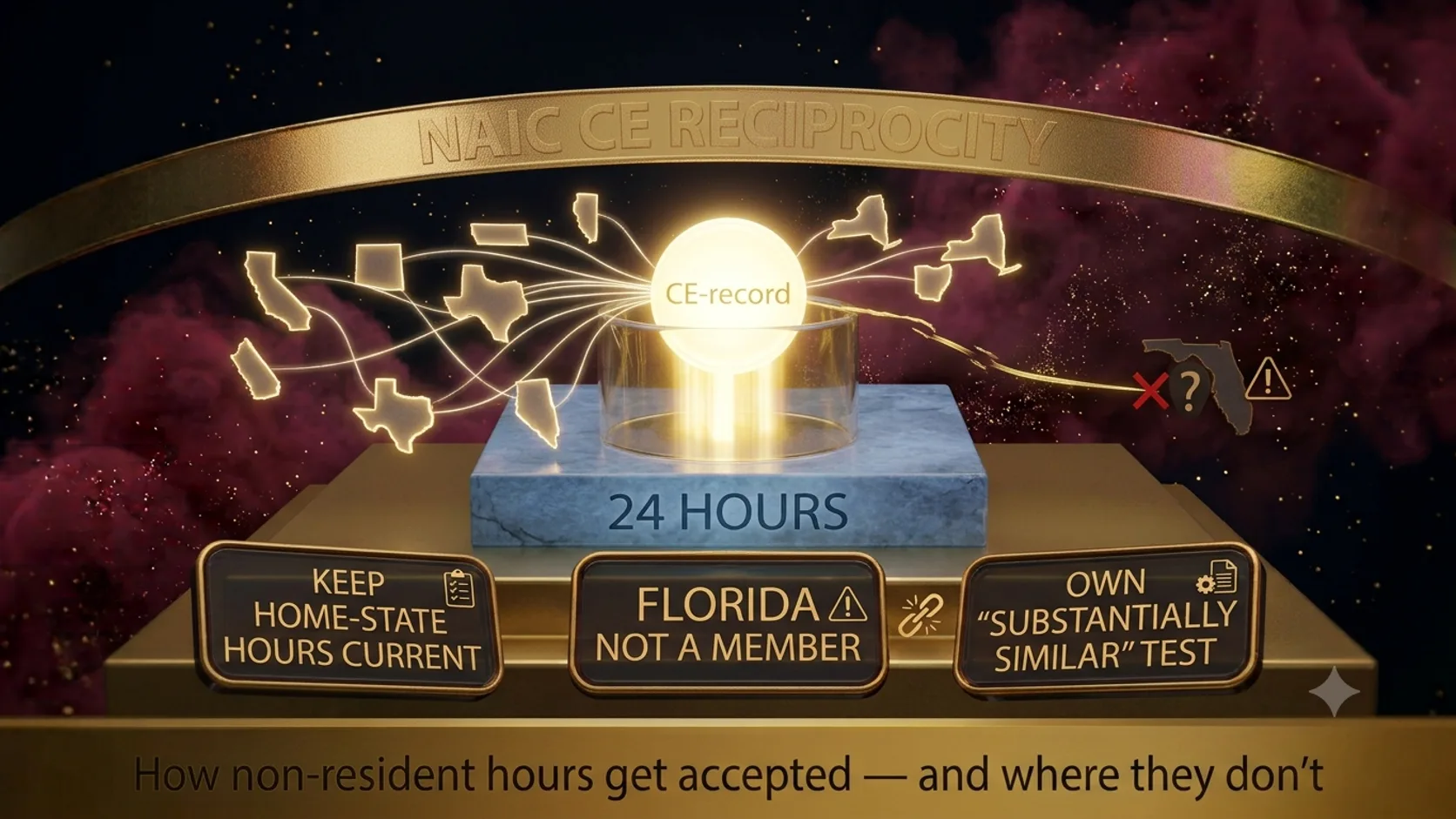
NAIC CE Reciprocity: How Non-Resident Hours Actually Get Accepted, and Why Florida Is Different
The mechanics of the NAIC Continuing Education Reciprocity agreement, what a non-resident state does and does not check, and how Florida — a non-member — still handles non-resident CE.
↗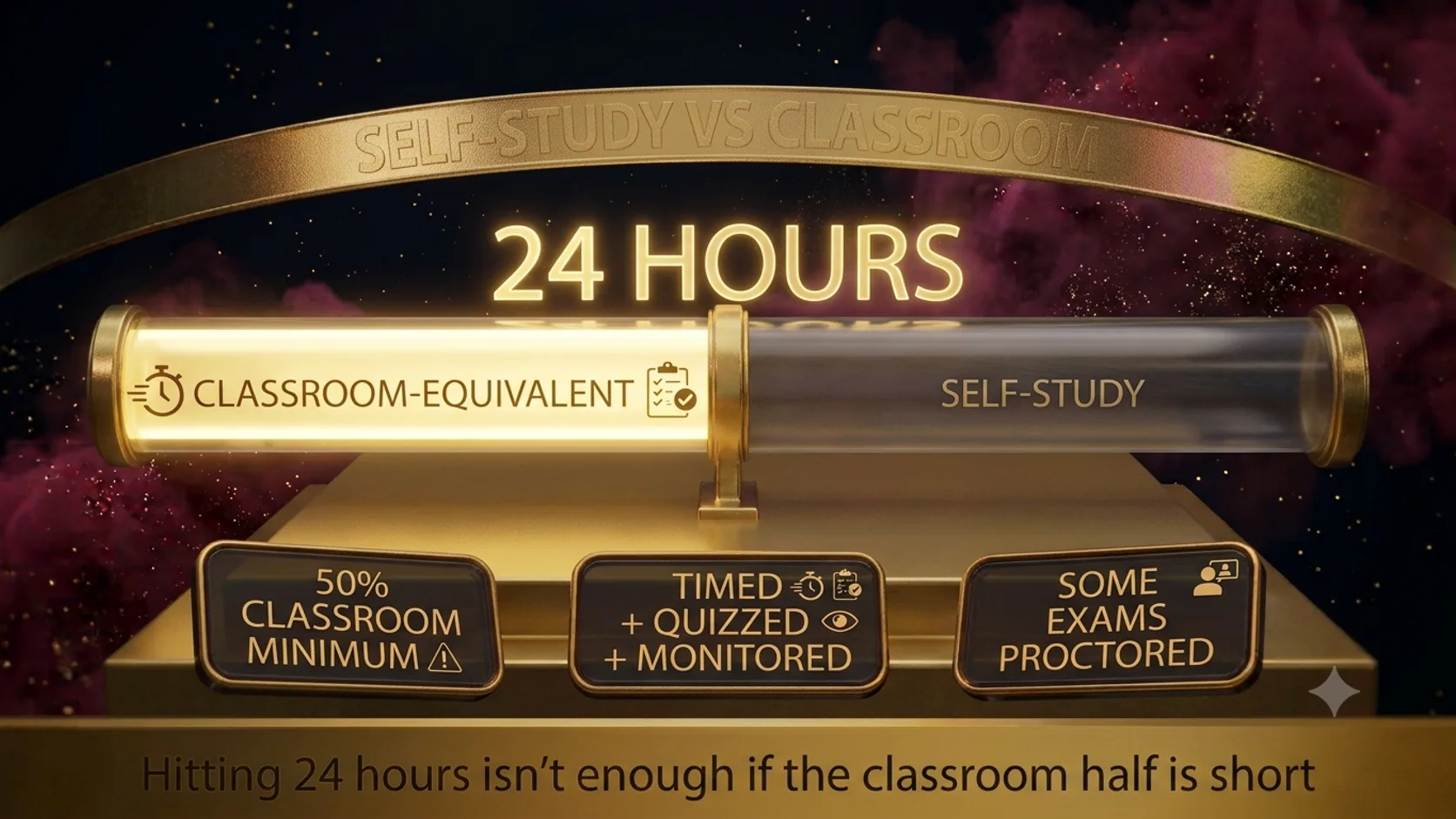
Self-Study vs. Classroom CE: The 50% Rule and What 'Classroom-Equivalent' Actually Means
Why many states cap how many CE hours can be pure self-study, how classroom-equivalent online courses are built to satisfy the classroom portion, and when a monitored exam is required.
↗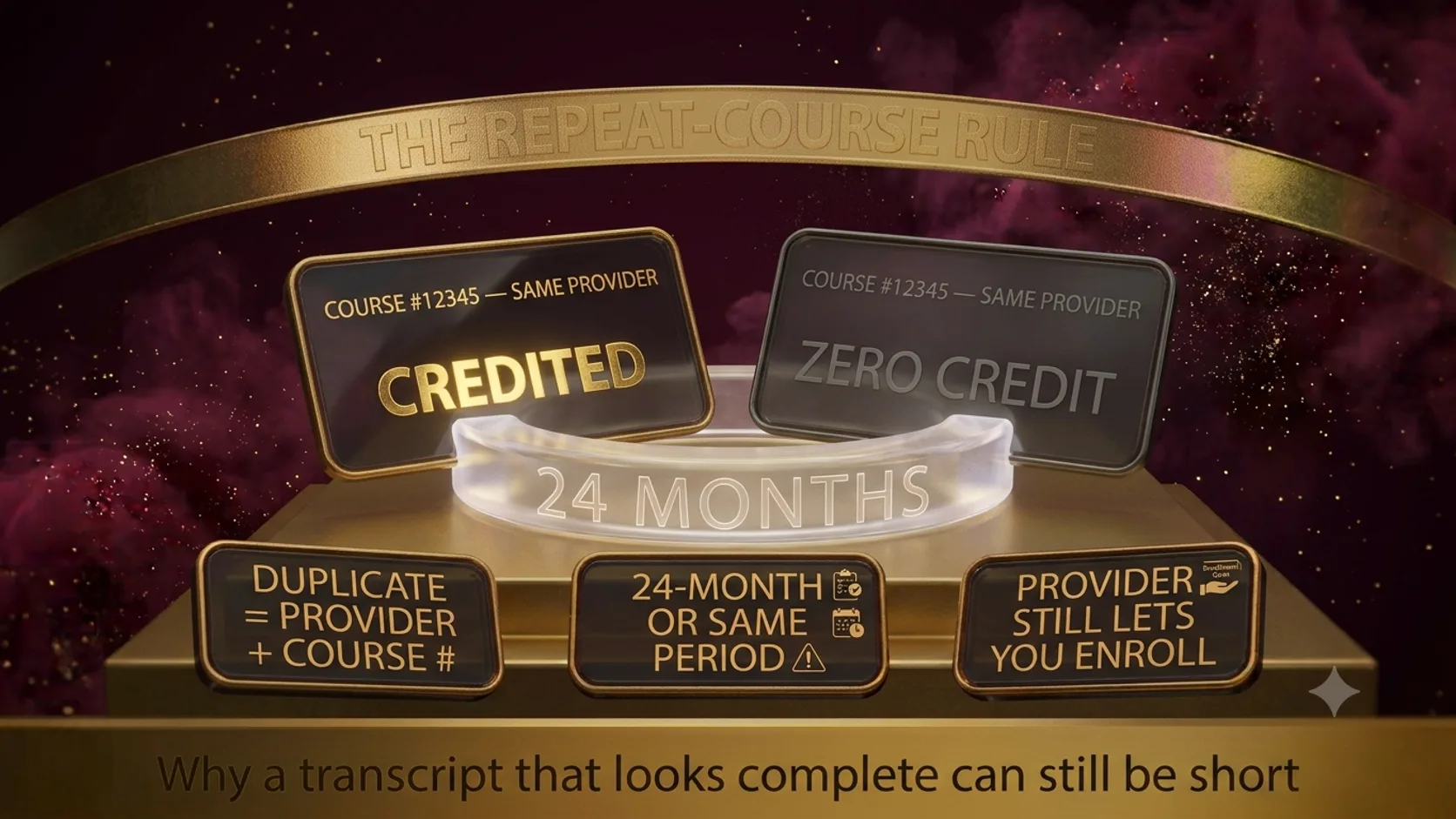
Approved Courses and the Repeat Rule: Why the Same CE Course Sometimes Earns Zero Credit
How CE course and provider approval works, what defines a duplicate course, and the 24-month or same-period rule that blocks credit for retaking a course you already completed.
↗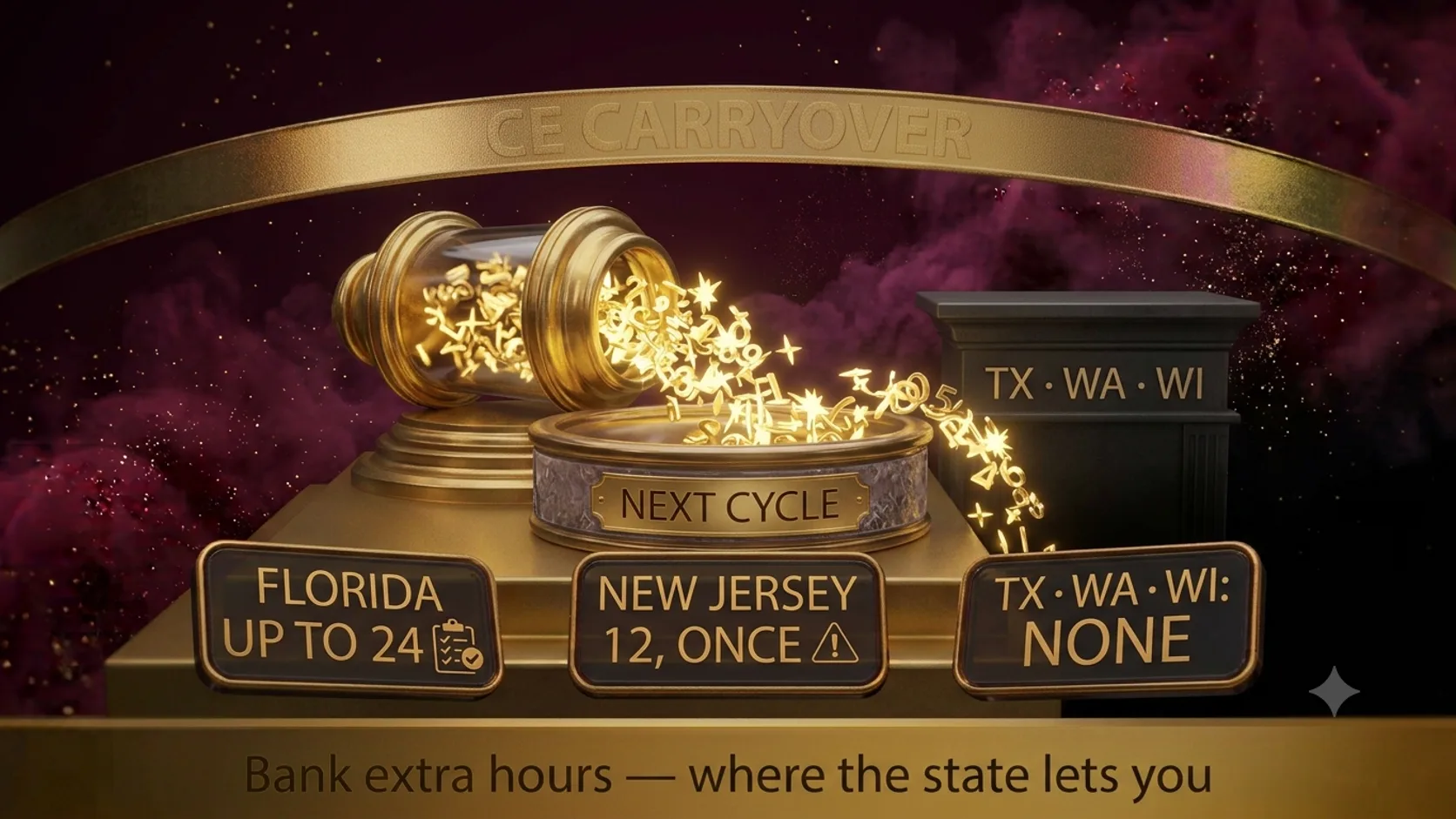
CE Carryover: Which States Let You Bank Extra Hours, and Which Zero Out at the Deadline
How excess-hour carryover works, the caps and one-time limits states place on it, why ethics hours usually cannot be carried, and the states that allow no carryover at all.
↗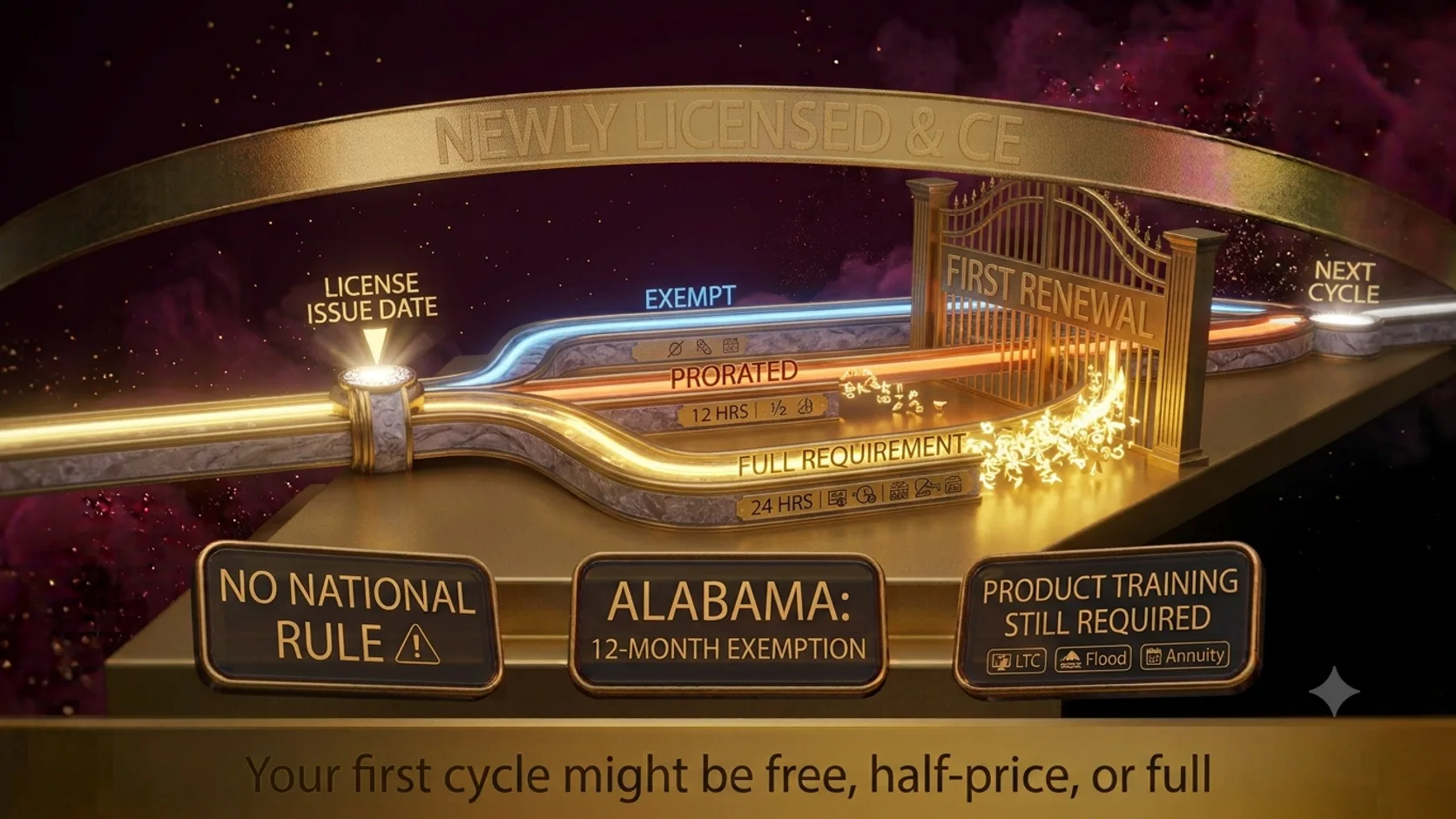
Newly Licensed Agents and CE: When the First Renewal Is Exempt, Prorated, or Full
How states handle continuing education for producers in their first license term — the ones that waive the first cycle, the ones that prorate it, and the product training that applies regardless.
↗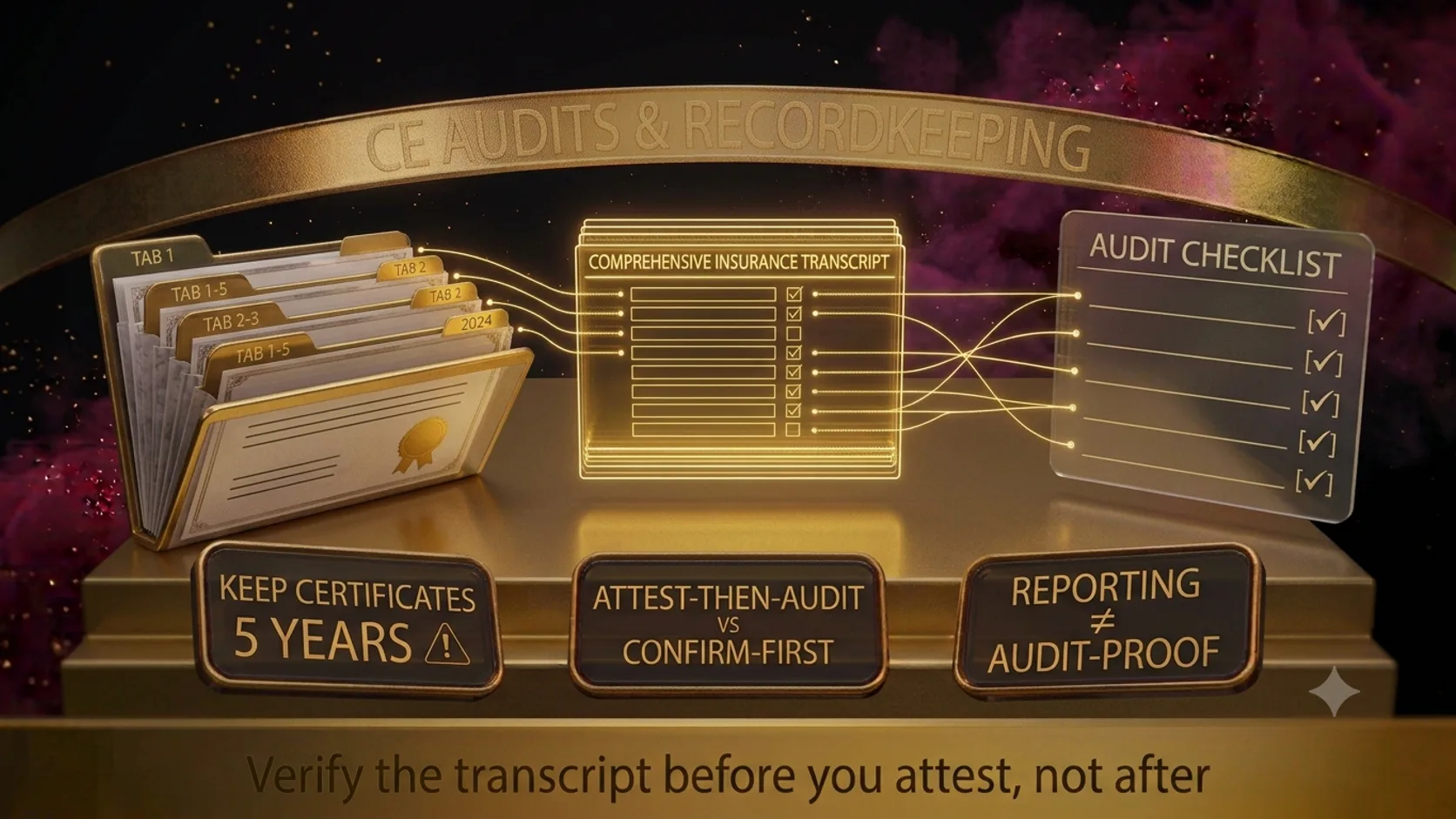
CE Audits: How States Verify Your Hours and What You Have to Keep
What happens in a continuing-education audit, why electronic reporting does not remove your recordkeeping duty, how long to keep certificates of completion, and how provider audits fit in.
↗
Active Military Service and Your CE Deadline: What States Actually Waive
The NAIC model provision letting states waive or extend CE for producers on active military duty, which states have implemented it, and why a waiver still needs a documented request rather than assuming it applies automatically.
↗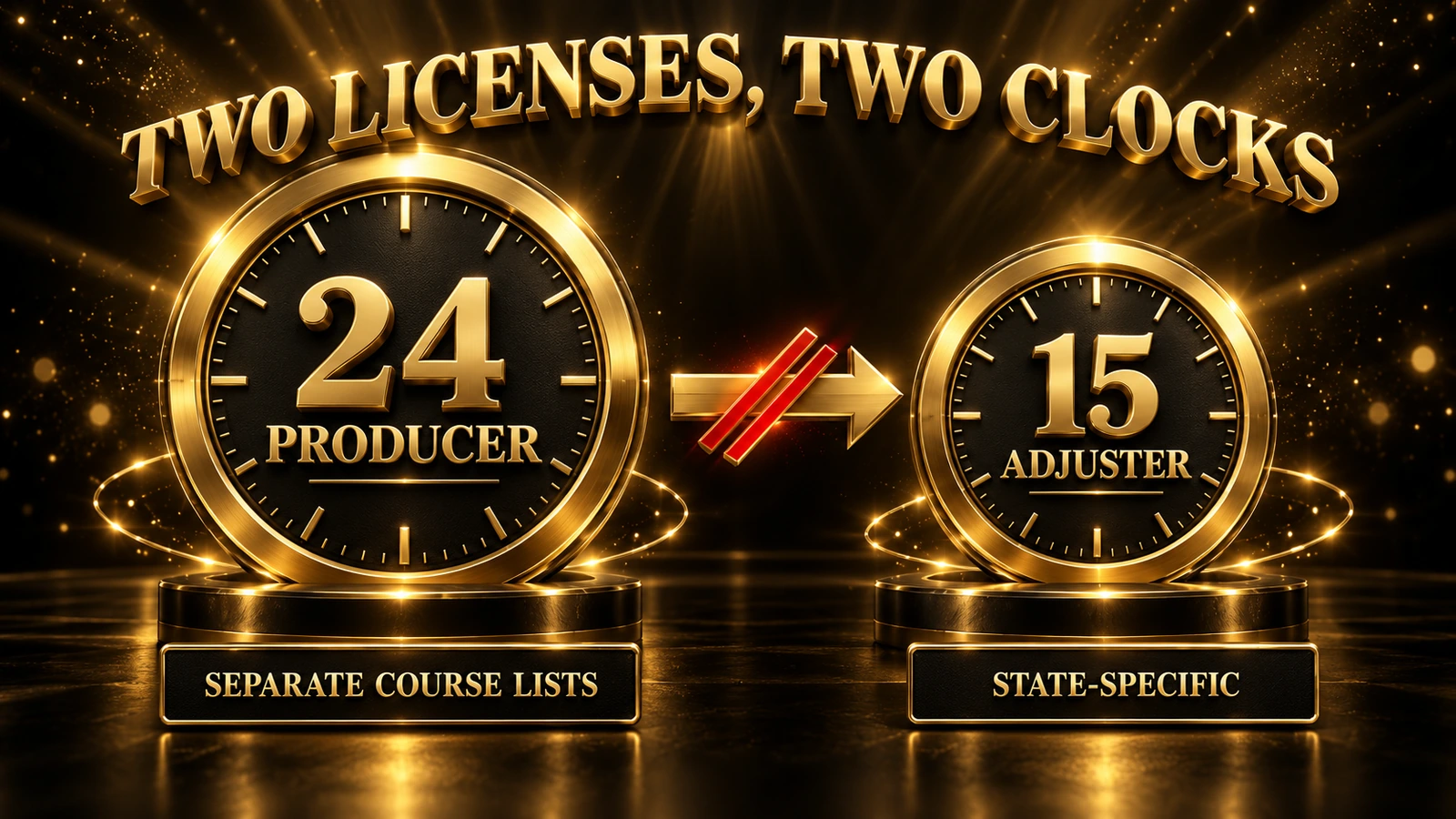
Public Adjuster CE vs. Producer CE: Why the Same State Can Require Different Hours
Public adjusters and producers are licensed separately, and many states set a different CE hour count for each. What one Massachusetts, New Jersey, and Louisiana example shows about the pattern, and why the two course types usually aren't interchangeable.
↗